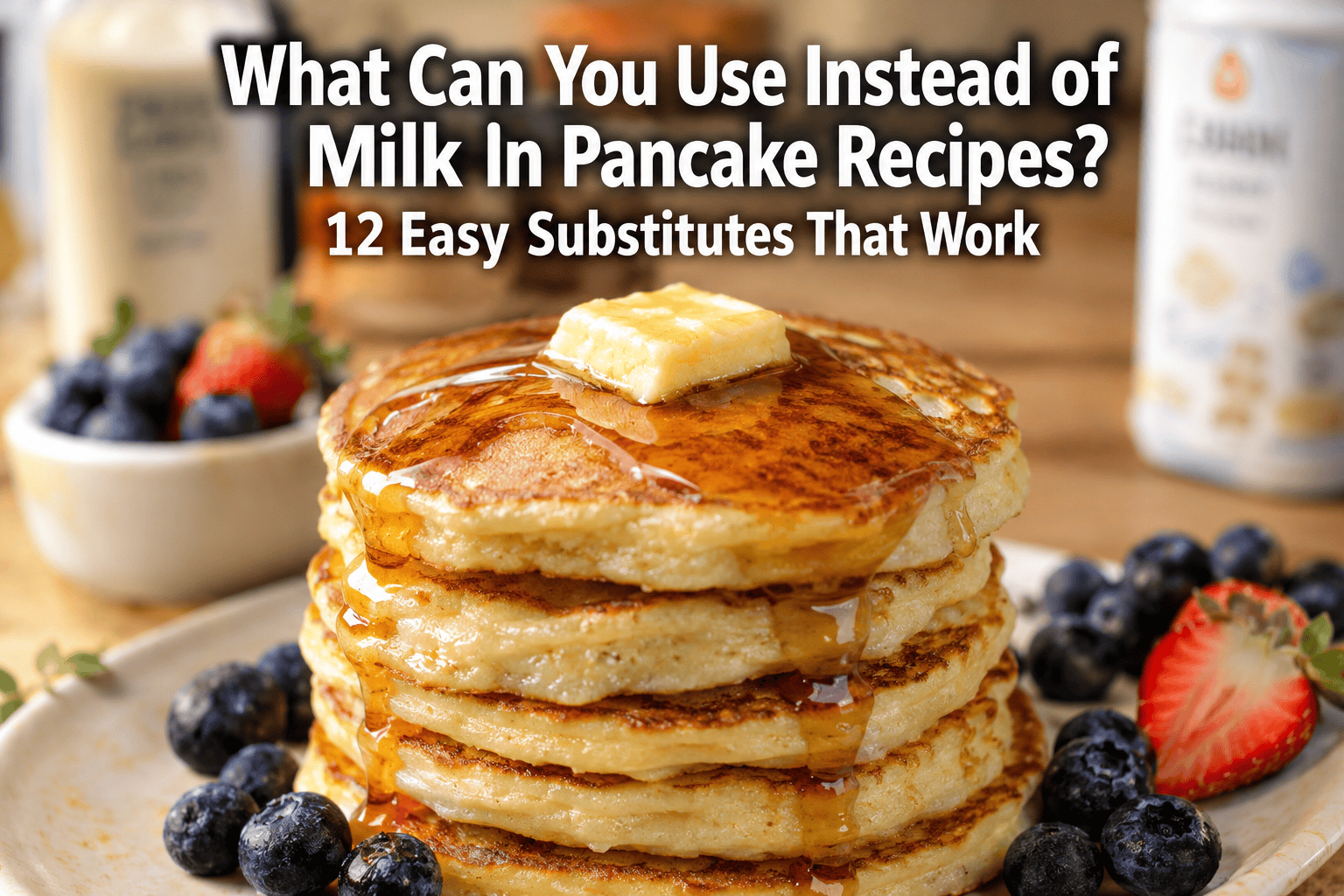
Pancakes are one of the easiest and most comforting breakfast foods to make at home. Whether you enjoy them fluffy and golden with butter and maple syrup or loaded with blueberries, chocolate chips, or fresh fruit, pancakes are a breakfast favorite for good reason.
But what happens when you start making pancakes and realize you are completely out of milk?
The good news is that you do not need regular milk to make delicious, fluffy pancakes. Several ingredients can replace milk in pancake recipes, including water, almond milk, oat milk, yogurt, buttermilk, and even fruit juice.
Some substitutes produce pancakes that taste almost identical to traditional recipes, while others change the texture, sweetness, or richness.
Understanding which milk substitutes work best can help you make perfect pancakes with ingredients you already have in your kitchen.
In this guide, we will explore 12 of the best substitutes for milk in pancakes, explain how each one affects your batter, and share a simple pancake recipe that requires no milk at all.
Can You Make Pancakes Without Milk?
Yes, you can absolutely make pancakes without milk.
Milk serves several purposes in traditional pancake recipes. It adds moisture, helps combine dry ingredients, contributes to browning, and provides some richness and flavor.
However, milk is not the ingredient responsible for making pancakes rise.
The fluffy texture of pancakes primarily comes from baking powder, baking soda when paired with an acidic ingredient, eggs, and the air incorporated into the batter.
This means that replacing milk with another liquid can still produce light, fluffy, and delicious pancakes.
The important part is choosing a substitute that provides enough moisture without making the batter too thin or thick.
12 Best Substitutes for Milk in Pancake Recipes
1. Water: The Easiest Milk Substitute
Water is the simplest and most affordable substitute for milk in pancakes.
If you are completely out of milk and do not have any plant-based alternatives available, water can save your breakfast.
Substitution ratio: Replace 1 cup of milk with 1 cup of water.
Water provides the moisture necessary to combine the pancake ingredients, but it does not contain the fat, protein, or natural sugars found in milk.
As a result, pancakes made with water may taste slightly less rich and have a lighter color.
To improve the flavor, consider adding an extra teaspoon or two of melted butter or vegetable oil to the batter.
A little vanilla extract can also make water-based pancakes taste more like traditional homemade pancakes.
Best for: Emergency substitutions, inexpensive breakfasts, and simple dairy-free pancakes.
2. Almond Milk: A Popular Dairy-Free Alternative
Almond milk is one of the most convenient substitutes for regular milk in pancake recipes.
Its mild, slightly nutty flavor complements traditional pancake ingredients without overpowering them.
Substitution ratio: Replace 1 cup of milk with 1 cup of almond milk.
Unsweetened almond milk is generally the best option because it allows you to control the sweetness of your pancakes.
Sweetened or vanilla-flavored almond milk can also work, although you may want to reduce the sugar or vanilla in your recipe.
Almond milk pancakes can be soft, tender, and fluffy when prepared with the right amount of baking powder.
Best for: Dairy-free pancakes, vegan recipes, and breakfasts with a subtle nutty flavor.
3. Oat Milk: One of the Best Overall Substitutes
Oat milk is an excellent choice when you want pancakes that closely resemble those made with traditional dairy milk.
It has a naturally creamy texture and a mild sweetness that works beautifully in pancake batter.
Substitution ratio: Replace 1 cup of milk with 1 cup of oat milk.
Oat milk generally produces tender pancakes with a pleasant flavor.
Because it contains carbohydrates that can contribute to browning, oat milk can also help pancakes develop an appealing golden surface.
Choose plain, unsweetened oat milk for the most versatile results.
Best for: Fluffy dairy-free pancakes, family breakfasts, and recipes where you want a familiar pancake flavor.
4. Soy Milk: A Reliable Replacement for Dairy Milk
Soy milk is another excellent dairy-free option, particularly because its protein content is often closer to cow’s milk than many other plant-based beverages.
Substitution ratio: Replace 1 cup of milk with 1 cup of soy milk.
Unsweetened soy milk works well in traditional pancake recipes and usually requires no major adjustments.
Its protein content can help support browning and structure, although the final texture also depends on the flour, eggs, and cooking method.
Soy milk has a slightly distinctive flavor, but that flavor is usually subtle once the pancakes are cooked.
Best for: Dairy-free pancakes, vegan pancake recipes, and people looking for a higher-protein plant-based milk alternative.
5. Buttermilk: The Secret to Extra-Fluffy Pancakes
Buttermilk is not dairy-free, but it is one of the best substitutes for regular milk when you want rich, tender pancakes.
Its natural acidity reacts with baking soda, creating carbon dioxide bubbles that help pancakes rise.
Substitution ratio: Start with 1 cup of buttermilk for every 1 cup of milk.
Because buttermilk is thicker than regular milk, you may need to add a small amount of water to achieve the desired batter consistency.
If your original pancake recipe contains only baking powder, adding approximately ¼ teaspoon of baking soda per cup of buttermilk can help take advantage of its acidity.
Buttermilk also gives pancakes a slightly tangy flavor that balances sweet toppings.
Best for: Classic Southern pancakes, thick fluffy pancakes, and traditional homemade breakfasts.
6. Greek Yogurt: A Thick and Creamy Substitute
Greek yogurt can replace milk in pancake recipes, but it needs to be thinned with water.
Because Greek yogurt is much thicker than milk, using it without dilution can produce batter that is difficult to spread.
Substitution ratio: Start with ½ cup plain Greek yogurt mixed with ½ cup water to replace 1 cup of milk.
Whisk the yogurt and water together until smooth before adding the mixture to your pancake batter.
You may need to adjust the amount of water depending on the thickness of your yogurt.
Greek yogurt contributes protein, richness, and a slightly tangy flavor.
Best for: Protein-rich pancakes, thick breakfast pancakes, and recipes with berries or bananas.
7. Sour Cream: For Rich and Tender Pancakes
Sour cream is another dairy-based ingredient that can replace milk when diluted.
Its fat content adds richness, while its acidity helps produce tender pancakes.
Substitution ratio: Mix ½ cup sour cream with ½ cup water to replace 1 cup of milk.
Whisk the mixture thoroughly before combining it with the dry ingredients.
Like buttermilk and yogurt, sour cream works particularly well in recipes that contain baking soda.
The finished pancakes may have a slightly tangy flavor and a soft, tender texture.
Best for: Rich homemade pancakes, weekend breakfasts, and thick pancake recipes.
8. Coconut Milk: For Richness and Tropical Flavor
Coconut milk is a flavorful alternative that works especially well in pancakes served with tropical fruit.
However, the type of coconut milk matters.
Carton coconut milk beverages are generally thinner, while canned coconut milk is much richer and contains significantly more fat.
Substitution ratio: Use 1 cup of carton coconut milk beverage for 1 cup of milk.
For full-fat canned coconut milk, start by diluting it with water until it reaches a consistency similar to regular milk.
Coconut milk adds a subtle coconut flavor that pairs well with pineapple, mango, banana, and toasted coconut.
Best for: Tropical pancakes, dairy-free breakfasts, and coconut-flavored recipes.
9. Cashew Milk: A Mild and Creamy Alternative
Cashew milk is another plant-based option that can replace traditional milk without significantly changing the pancake flavor.
It has a smooth texture and a mild taste.
Substitution ratio: Replace 1 cup of milk with 1 cup of cashew milk.
Unsweetened cashew milk works best for everyday pancake recipes.
Because many commercial cashew milk beverages are relatively low in fat and protein, the resulting pancakes may be slightly less rich than those made with whole milk.
Adding a little melted butter or oil can help improve tenderness.
Best for: Dairy-free pancakes, mild-flavored breakfast recipes, and pancakes served with fruit.
10. Evaporated Milk: A Pantry-Friendly Substitute
Evaporated milk is an excellent option if you have a can in your pantry but no fresh milk in the refrigerator.
Evaporated milk is regular milk that has had much of its water removed.
It has a concentrated flavor and creamy texture.
Substitution ratio: Mix ½ cup evaporated milk with ½ cup water to replace 1 cup of regular milk.
This diluted mixture works well in most standard pancake recipes.
Evaporated milk can provide a rich flavor and help produce tender, golden pancakes.
Remember that evaporated milk is different from sweetened condensed milk, which contains a large amount of added sugar.
Best for: Pantry cooking, traditional pancakes, and breakfasts when fresh milk is unavailable.
11. Heavy Cream: For Extra-Rich Pancakes
Heavy cream can be used as a milk substitute, but it should be diluted because its fat content is much higher than regular milk.
Substitution ratio: Start with ¼ cup heavy cream and ¾ cup water to replace 1 cup of milk.
This mixture will not match the exact composition of regular milk, but it can provide a useful substitute in pancake batter.
The cream adds richness, while the water prevents the batter from becoming excessively heavy.
Adjust the consistency if necessary.
Best for: Rich breakfast pancakes and recipes where a creamy, buttery flavor is desired.
12. Fruit Juice: A Creative Substitute for Sweet Pancakes
Fruit juice may sound unusual, but it can work in certain pancake recipes.
Apple juice and orange juice are two options worth trying.
Substitution ratio: Start with 1 cup of juice for every 1 cup of milk, adjusting as needed.
Fruit juice adds moisture and sweetness, but it also changes the flavor of the pancakes.
Apple juice works particularly well with cinnamon pancakes, while orange juice can complement citrus-flavored breakfast recipes.
Because fruit juice contains natural sugars, pancakes may brown more quickly.
Cook them over medium-low heat and watch carefully to prevent burning.
For less sweetness, try replacing only half the milk with juice and using water for the remaining liquid.
Best for: Apple cinnamon pancakes, citrus pancakes, and sweet fruit-inspired breakfasts.
Milk Substitute Comparison Chart
Not every milk substitute produces the same results. Some work best for traditional fluffy pancakes, while others add richness or distinctive flavors.
| Milk substitute | Replacement for 1 cup milk | Best quality |
|---|---|---|
| Water | 1 cup | Simple and inexpensive |
| Almond milk | 1 cup | Mild, slightly nutty |
| Oat milk | 1 cup | Creamy and tender |
| Soy milk | 1 cup | Good structure |
| Buttermilk | 1 cup, adjust thickness | Tangy and fluffy |
| Greek yogurt | ½ cup + ½ cup water | Thick and protein-rich |
| Sour cream | ½ cup + ½ cup water | Rich and tender |
| Coconut milk beverage | 1 cup | Subtle coconut flavor |
| Cashew milk | 1 cup | Smooth and mild |
| Evaporated milk | ½ cup + ½ cup water | Rich pantry substitute |
| Heavy cream | ¼ cup + ¾ cup water | Creamy and rich |
| Fruit juice | 1 cup | Sweet and fruity |
These ratios are starting points. Different brands and recipes may require small adjustments to achieve the ideal batter consistency.
Easy Fluffy Pancake Recipe Without Milk
You do not need expensive ingredients or specialty products to make delicious homemade pancakes without milk.
This simple recipe uses water and common pantry ingredients.
Ingredients
-
1½ cups all-purpose flour
-
2 tablespoons granulated sugar
-
1 tablespoon baking powder
-
½ teaspoon salt
-
1¼ cups water
-
1 large egg
-
3 tablespoons melted butter or vegetable oil
-
1 teaspoon vanilla extract
Instructions
Step 1: Combine the dry ingredients.
In a large mixing bowl, whisk together the flour, sugar, baking powder, and salt.
Make sure the baking powder is evenly distributed throughout the flour.
Step 2: Mix the wet ingredients.
In a separate bowl, whisk together the water, egg, melted butter or oil, and vanilla extract.
If using melted butter, allow it to cool slightly before mixing it with the egg.
Step 3: Combine the mixtures.
Pour the wet ingredients into the bowl containing the dry ingredients.
Stir gently until everything is just combined.
A few small lumps are perfectly fine.
Avoid overmixing because excessive stirring can develop gluten and produce tough pancakes.
Step 4: Let the batter rest.
Allow the pancake batter to rest for approximately 5 minutes.
This gives the flour time to absorb the liquid and allows the batter to thicken slightly.
Step 5: Heat the skillet.
Place a nonstick skillet or griddle over medium heat.
Lightly grease the cooking surface with butter or oil.
Step 6: Cook the pancakes.
Pour approximately ¼ cup of batter onto the skillet for each pancake.
Cook for about 2–3 minutes, or until bubbles appear on the surface and the edges begin to look set.
Flip carefully and cook for another 1–2 minutes until golden brown and cooked through.
Step 7: Serve warm.
Transfer the finished pancakes to a plate and serve with your favorite toppings.
Maple syrup, fresh berries, sliced bananas, peanut butter, or a little powdered sugar all work beautifully.
How to Make Pancakes Fluffy Without Milk
Replacing milk does not mean sacrificing fluffy pancakes.
Several simple techniques can help produce light, tender pancakes regardless of which substitute you choose.
Use Fresh Baking Powder
Baking powder is one of the most important ingredients for fluffy pancakes.
It creates gas bubbles that expand during cooking, helping the pancakes rise.
Old or expired baking powder may not produce enough lift.
Avoid Overmixing the Batter
Overmixing is one of the most common pancake mistakes.
When flour is mixed excessively with liquid, gluten develops and can make pancakes chewy or rubbery.
Stir the batter only until the ingredients are combined.
Keep the Batter Slightly Thick
Pancake batter should be thick enough to spread slowly when poured onto a skillet.
If the batter is too thin, the pancakes may spread too much and cook flat.
If it is too thick, the centers may remain undercooked.
Adjust the consistency by adding small amounts of flour or liquid.
Cook at the Right Temperature
Medium heat is usually ideal for pancakes.
If the skillet is too hot, the outside can burn before the inside finishes cooking.
If the skillet is too cool, pancakes may cook slowly and develop a less appealing texture.
Flip Only Once When Possible
Wait until bubbles appear and the edges begin to set before flipping.
Avoid repeatedly flipping or pressing down on the pancakes with a spatula.
Pressing pancakes can squeeze out some of the air and reduce their fluffy texture.
Which Milk Substitute Makes the Fluffiest Pancakes?
Buttermilk is one of the best choices for making extra-fluffy pancakes when the recipe includes the appropriate leavening ingredients.
Its acidity reacts with baking soda to help create a light, airy texture.
For dairy-free pancakes, oat milk and soy milk are excellent choices.
Both can produce tender, fluffy pancakes without requiring significant changes to a traditional recipe.
Water also works surprisingly well, especially when the recipe contains fresh baking powder and a little added fat.
The key is remembering that fluffiness depends more on your leavening ingredients, batter consistency, and cooking technique than on milk alone.
Can You Make Pancakes Without Milk or Eggs?
Yes, pancakes can be made without both milk and eggs.
For an egg-free and dairy-free pancake recipe, use water or plant-based milk and replace the egg with another binding ingredient.
Common egg substitutes include mashed banana, unsweetened applesauce, and commercial egg replacers.
For example, approximately ¼ cup of mashed banana can replace one egg in many pancake recipes.
However, banana adds sweetness and a noticeable flavor.
Approximately ¼ cup of unsweetened applesauce is another option, although it may create a softer pancake texture.
Egg-free pancakes can be delicious, but they may be slightly more delicate than traditional pancakes.
Common Mistakes When Replacing Milk in Pancakes
Even though replacing milk is simple, a few mistakes can affect your results.
Using too much liquid: Some substitutes are thinner than milk. Adding too much can create runny batter and flat pancakes.
Using thick yogurt without dilution: Greek yogurt and sour cream should usually be mixed with water before replacing milk.
Forgetting about added sugar: Sweetened plant-based milk and fruit juice may make pancakes sweeter than expected.
Ignoring acidity: Buttermilk, yogurt, and sour cream work differently from neutral liquids. Recipes containing baking soda may need adjustments.
Using canned coconut milk without checking its consistency: Full-fat canned coconut milk is much richer than carton coconut milk and may need dilution.
Cooking over excessive heat: Pancakes made with sweetened substitutes can brown quickly, sometimes before the center is fully cooked.
Making small adjustments can help you avoid these problems and create better pancakes.
Frequently Asked Questions About Milk Substitutes for Pancakes
Can I use water instead of milk in pancake mix?
Yes. Most complete pancake mixes can be prepared with water, although you should follow the instructions on the package.
Some pancake mixes are specifically designed to require only water.
Others may produce better flavor and texture when prepared with milk.
What is the best substitute for milk in pancakes?
Oat milk is one of the best overall substitutes because of its creamy texture and mild flavor.
Soy milk and almond milk are also excellent choices.
If dairy is not a concern, buttermilk can produce particularly tender and fluffy pancakes.
Can I use coffee creamer instead of milk in pancakes?
Yes, some coffee creamers can work as milk substitutes, but they may contain added sugar, oils, and flavorings.
Unflavored creamer is generally easier to use than strongly flavored varieties.
Because creamers vary widely in thickness and sweetness, start with a small amount and adjust the batter as needed.
Can I use half-and-half instead of milk?
Yes. Half-and-half can replace milk in pancakes.
For a lighter result, mix approximately ½ cup half-and-half with ½ cup water to replace 1 cup of milk.
Using undiluted half-and-half will produce a richer batter.
Can I use almond milk instead of regular milk in Bisquick pancakes?
Yes. Unsweetened almond milk can generally replace regular milk in Bisquick pancake recipes using a 1:1 ratio.
The final texture may vary slightly depending on the specific mix and almond milk brand.
Can I use yogurt instead of milk in pancakes?
Yes. Plain yogurt works well when thinned with water.
Start with equal parts yogurt and water, then adjust until the mixture has a consistency similar to milk.
What can I use instead of milk in pancakes if I have no dairy products?
Water, almond milk, oat milk, soy milk, cashew milk, and coconut milk beverages are all dairy-free options.
Water is the easiest substitute because it requires no specialty ingredients.
Will pancakes taste different without milk?
They can, depending on the substitute.
Water produces a milder flavor, while coconut milk adds a subtle tropical taste.
Oat milk and soy milk often provide results that are closer to traditional pancakes.
Adding vanilla extract, cinnamon, or a little extra butter or oil can help improve the flavor.
Can I use orange juice instead of milk in pancakes?
Yes, especially in citrus-flavored pancake recipes.
However, orange juice adds acidity and sugar, which can affect browning and texture.
For a more balanced flavor, consider replacing only part of the milk with orange juice.
Can I make pancakes with just flour and water?
Flour and water can form a basic batter that cooks into a flat pancake-like bread.
However, it will not have the same fluffy texture as traditional American pancakes.
For better results, add baking powder, a little salt, and some oil.
Final Thoughts: You Don’t Need Milk to Make Delicious Pancakes
Running out of milk does not have to ruin your breakfast plans.
Whether you choose water, oat milk, almond milk, soy milk, yogurt, buttermilk, or another substitute, there are plenty of ways to prepare delicious homemade pancakes without regular milk.
For the closest alternative to traditional milk, oat milk and soy milk are excellent options.
For extra-fluffy pancakes, buttermilk is a favorite when paired with the right leavening ingredients.
And when your refrigerator is nearly empty, plain water can still produce a satisfying stack of homemade pancakes.
The secret to great pancakes is not necessarily the type of milk you use. It is finding the right batter consistency, using fresh ingredients, avoiding overmixing, and cooking at the proper temperature.
With these simple techniques, you can enjoy warm, golden, fluffy pancakes using ingredients you already have at home.
The next time you run out of milk, don’t skip breakfast. Grab one of these easy substitutes and start making pancakes.
Leave a Reply