Bacon is one of the most popular breakfast foods in America, loved for its crispy texture, smoky flavor, and irresistible aroma. Whether you’re preparing a traditional Southern breakfast, making bacon for a breakfast sandwich, or adding crispy strips to a favorite recipe, bacon can make almost any meal better.
Unfortunately, cooking bacon can also create one of the biggest messes in the kitchen.
Grease splatters across the stovetop, oil collects in the skillet, and cleanup sometimes takes longer than cooking the bacon itself. Anyone who has cooked bacon in a frying pan knows how quickly hot grease can turn a simple breakfast into a frustrating experience.
The good news is that cooking bacon doesn’t have to be messy.
With the right cooking method, temperature, and equipment, you can enjoy perfectly crispy bacon without covering your kitchen in grease.
So, what is the best way to cook bacon without making a mess?
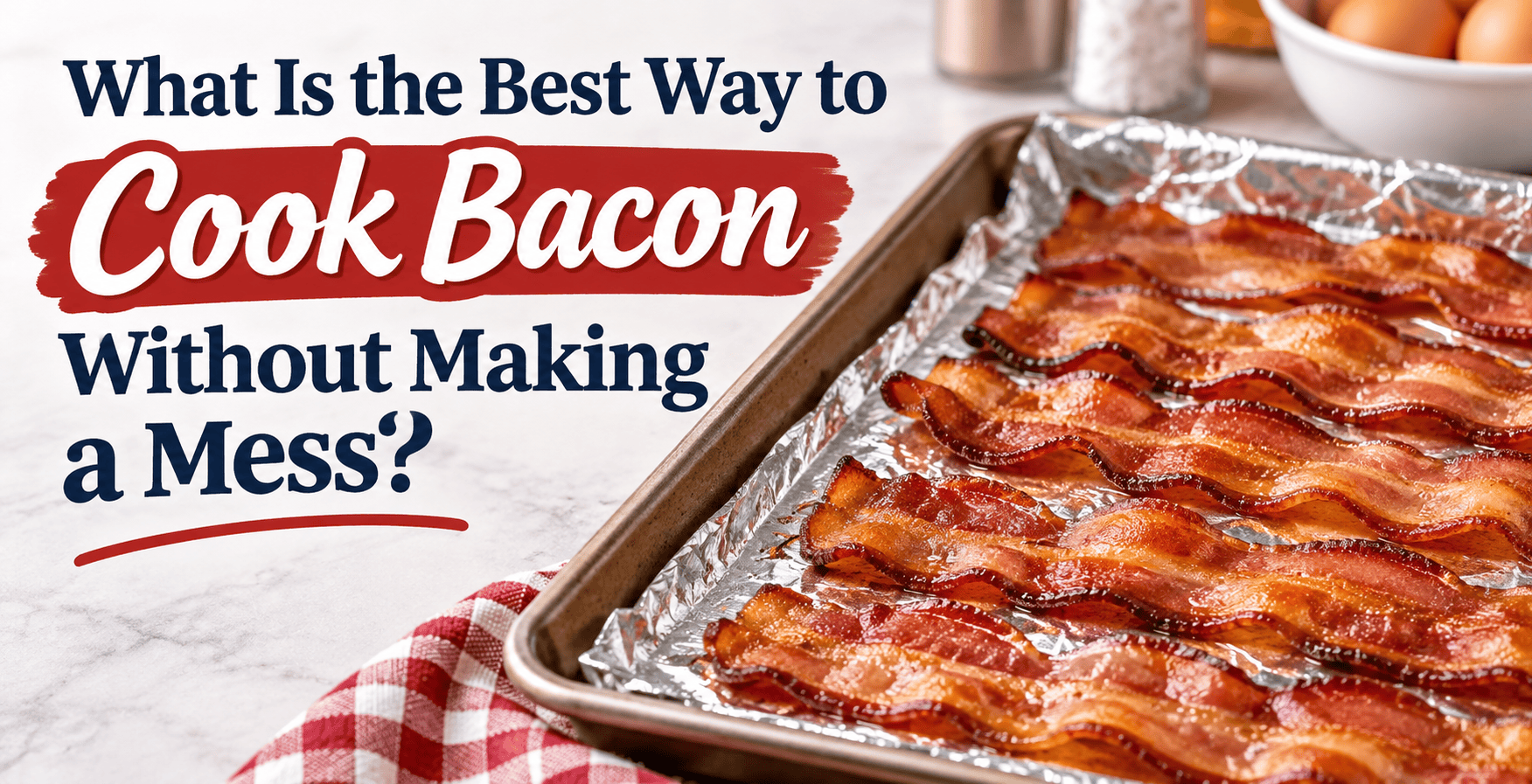
The best overall method is baking bacon in the oven on a rimmed baking sheet lined with aluminum foil or parchment paper. This method minimizes grease splatter, cooks multiple strips at once, and makes cleanup much easier than traditional stovetop frying.
However, several other cooking methods can also help keep your kitchen clean.
Let’s explore the easiest ways to cook bacon without making a mess, along with helpful tips for getting crispy, delicious results every time.
Why Does Cooking Bacon Make Such a Mess?
Before exploring the best cooking methods, it helps to understand why bacon creates so much grease and splatter.
Bacon contains a significant amount of fat. As the bacon heats, that fat melts and turns into liquid grease.
When moisture from the bacon comes into contact with hot grease, it can cause bubbling and splattering.
Several factors can make the problem worse.
Cooking Bacon at Too High a Temperature
High heat causes bacon fat to render quickly and can increase grease splatter.
It can also burn the edges of the bacon before the rest of the strip becomes crispy.
Using a Shallow Frying Pan
Traditional frying pans often have relatively low sides.
As grease bubbles, droplets can escape the skillet and land on the stovetop, countertops, and nearby surfaces.
Overcrowding the Pan
Placing too many bacon strips in a skillet can cause uneven cooking.
The strips may overlap, trap moisture, and make it harder to control the cooking process.
Starting With an Overheated Pan
Adding cold bacon directly to a very hot skillet can cause rapid sizzling and grease splatter.
Starting bacon in a cold skillet and gradually increasing the temperature often provides better control.
Understanding these common problems makes it easier to choose a cleaner cooking method.
1. Bake Bacon in the Oven for the Least Mess
BEST OVERALL METHOD
Baking bacon in the oven is one of the easiest and cleanest ways to prepare it.
Instead of cooking bacon directly on the stovetop, you arrange the strips on a baking sheet and allow the oven to do the work.
The grease stays mostly contained on the baking sheet, reducing the amount of splatter around your kitchen.
What You’ll Need
-
8–12 slices of bacon
-
1 large rimmed baking sheet
-
Aluminum foil or oven-safe parchment paper
-
Kitchen tongs
-
Paper towels
-
A plate
How to Cook Bacon in the Oven
Step 1: Preheat the oven.
Preheat your oven to 400°F.
This temperature works well for cooking bacon evenly while helping the fat render and the strips become crispy.
Step 2: Prepare the baking sheet.
Line a rimmed baking sheet with aluminum foil or parchment paper rated for the oven temperature.
Make sure the liner fits inside the rimmed edges so grease cannot run underneath or spill out.
Step 3: Arrange the bacon.
Place the bacon strips in a single layer.
The strips can sit close together, but avoid overlapping them.
Step 4: Bake the bacon.
Place the baking sheet on the middle oven rack.
Cook for approximately 15–20 minutes, depending on the thickness of the bacon and your preferred crispiness.
Thin bacon may finish sooner, while thick-cut bacon may require 20–25 minutes.
Step 5: Remove the bacon.
Carefully remove the baking sheet from the oven, keeping it level to avoid spilling hot grease.
Transfer the bacon to a paper towel-lined plate using kitchen tongs.
Step 6: Allow the grease to cool.
Let the bacon grease cool completely before removing the liner or disposing of the grease.
Never pour bacon grease directly down the kitchen sink.
Why Oven-Baked Bacon Creates Less Mess
Oven baking offers several advantages over stovetop frying.
-
Grease remains largely contained on the baking sheet.
-
You don’t have to constantly flip the bacon.
-
Multiple strips cook at the same time.
-
Cleanup is easier with a disposable liner.
-
Bacon generally cooks more evenly.
-
There is less grease splatter on surrounding kitchen surfaces.
For families preparing breakfast for several people, oven baking is especially convenient.
2. Cook Bacon in the Air Fryer for Quick Cleanup
An air fryer is another excellent option for cooking bacon without creating a large mess.
Air fryers circulate hot air around food, helping bacon become crispy while allowing some of the rendered grease to collect below the cooking basket.
Because the cooking area is enclosed, grease splatter generally stays inside the appliance.
How to Cook Bacon in an Air Fryer
-
Preheat the air fryer to 350°F if recommended by the manufacturer.
-
Arrange bacon strips in a single layer in the basket.
-
Cook for approximately 7–10 minutes.
-
Check the bacon and continue cooking if necessary.
-
Remove the bacon with tongs.
-
Allow the grease to cool before cleaning the basket and drawer.
Thick-cut bacon may need several additional minutes.
Advantages of Air Fryer Bacon
Air fryer bacon works especially well when preparing smaller portions.
It offers quick cooking, minimal stovetop mess, and crispy results.
However, air fryers have limited basket space, so larger batches may require several rounds.
Bacon grease can also smoke in some air fryers, particularly when the appliance contains old grease or is operated at excessive temperatures.
Always follow the manufacturer’s instructions for cooking fatty foods, and never leave the air fryer unattended.
3. Cook Bacon in the Microwave for the Fastest Cleanup
If you’re cooking only a few strips, the microwave may be the quickest option.
Microwave bacon doesn’t develop exactly the same texture as skillet-fried bacon, but it can still become crispy.
Best of all, cleanup is relatively simple.
How to Cook Bacon in the Microwave
-
Place two or three layers of paper towels on a microwave-safe plate.
-
Arrange 2–4 bacon strips in a single layer.
-
Cover the bacon with another paper towel.
-
Microwave on high for approximately 2–4 minutes.
-
Continue heating in 20–30-second intervals until the bacon reaches your desired crispiness.
-
Let the bacon rest briefly before removing it.
Cooking times vary significantly depending on microwave wattage, bacon thickness, and the number of strips.
Use microwave-safe materials and monitor the bacon closely.
Why Microwave Bacon Is Less Messy
The paper towels absorb much of the grease while the top layer helps reduce splattering inside the microwave.
This makes the method particularly useful for preparing bacon for breakfast sandwiches, burgers, or salads.
The main disadvantage is that microwave bacon may cook unevenly or become overly dry if heated too long.
4. Use a Splatter Screen When Frying Bacon on the Stove
Some people prefer the flavor and texture of bacon cooked in a traditional skillet.
Fortunately, you can still reduce the mess without giving up stovetop cooking.
One of the simplest solutions is using a splatter screen.
A splatter screen is a fine mesh cover that sits over a frying pan.
It allows steam to escape while blocking many of the grease droplets that would otherwise land on your stovetop.
How to Fry Bacon With Less Splatter
Start by placing the bacon strips in a cold skillet.
Turn the burner to medium-low heat.
Allow the bacon to warm gradually so the fat renders slowly.
Place a splatter screen over the skillet and cook the bacon, turning occasionally.
As the bacon becomes crispy, remove it with tongs and transfer it to a paper towel-lined plate.
Why Starting With a Cold Pan Helps
Starting bacon in a cold skillet allows the fat to melt more gradually.
This can reduce sudden sizzling and improve the bacon’s texture.
It also gives you more control over the cooking process.
A splatter screen won’t eliminate every grease droplet, but it can make a noticeable difference.
5. Try Cooking Bacon With a Little Water
One less common method for cooking bacon involves adding a small amount of water to the skillet.
Although it might sound unusual, this technique can help the bacon fat render gradually.
The water initially limits the temperature of the cooking surface while it evaporates.
Once the water disappears, the bacon continues cooking in its own rendered fat.
How to Cook Bacon With Water
-
Arrange bacon strips in a cold skillet.
-
Add just enough water to lightly cover the bottom of the pan.
-
Turn the heat to medium.
-
Allow the water to simmer and gradually evaporate.
-
Reduce the heat if necessary once the water disappears.
-
Continue cooking until the bacon becomes crispy.
-
Transfer the bacon to a paper towel-lined plate.
Does Cooking Bacon With Water Prevent Splatter?
This method may reduce splattering during the initial cooking stage.
However, it doesn’t completely eliminate grease splatter once the water evaporates.
It also takes longer than conventional skillet cooking.
For people who enjoy frying bacon but want more control over the cooking process, it can be worth trying.
Which Bacon Cooking Method Makes the Least Mess?
Each cooking method has advantages, but some are more convenient than others.
| Cooking method | Mess level | Typical cooking time |
|---|---|---|
| Oven | Very low | 15–25 minutes |
| Air fryer | Low externally | 7–12 minutes |
| Microwave | Very low | 2–5 minutes |
| Skillet with splatter screen | Moderate | 8–15 minutes |
| Skillet with water | Moderate | 12–20 minutes |
These are approximate times, not guarantees. Bacon thickness, equipment, and desired crispiness all affect cooking time.
For most households, oven baking offers the best combination of easy cleanup, even cooking, and convenience.
The microwave is particularly useful for small portions, while the air fryer is a good alternative when you want crispy bacon without heating a full oven.
Should You Use Aluminum Foil or Parchment Paper for Bacon?
Both aluminum foil and parchment paper can make cleaning up after oven-baked bacon easier.
However, there are a few differences worth considering.
Aluminum Foil
Aluminum foil is an excellent choice for containing bacon grease.
It can be fitted closely against the bottom and sides of a rimmed baking sheet.
Once the grease cools, the foil can be carefully removed and discarded.
Heavy-duty aluminum foil is particularly useful because it is less likely to tear.
Parchment Paper
Parchment paper provides a convenient nonstick surface.
It can make transferring bacon easier and prevent strips from sticking to the baking sheet.
However, parchment paper doesn’t conform to the edges of the pan as tightly as aluminum foil.
Grease may collect underneath it, so the baking sheet may still require washing.
Always check the parchment paper’s maximum recommended temperature.
Which One Is Better?
If your main goal is minimizing cleanup, aluminum foil generally has the advantage.
If you prefer a nonstick surface, parchment paper is a good alternative.
Regardless of which material you choose, always use a rimmed baking sheet to contain the grease.
How Do You Keep Bacon From Splattering in the Oven?
Although baking bacon is cleaner than frying, grease can still splatter inside the oven.
Fortunately, a few simple precautions can help.
Use a Rimmed Baking Sheet
Never cook bacon on a completely flat baking sheet without raised edges.
As the bacon cooks, grease accumulates.
A rimmed pan helps prevent that grease from spilling onto the oven floor.
Avoid Excessively High Temperatures
Cooking bacon at 400°F usually provides a good balance between crispiness and controlled cooking.
Higher temperatures can cause more smoke and may burn the bacon before it cooks evenly.
Don’t Overcrowd the Baking Sheet
Arrange the bacon in a single layer.
Overlapping strips can cook unevenly and make it harder to achieve consistent crispiness.
Keep Your Oven Clean
Old grease and food residue can create smoke when heated.
Regular oven cleaning helps reduce this problem.
Don’t Cover Bacon With Loose Paper Towels
Paper towels should never be placed over bacon inside a conventional oven because they can catch fire.
Use paper towels only after cooking to absorb excess grease.
How Do You Make Bacon Extra Crispy Without Burning It?
One of the biggest challenges when cooking bacon is achieving the perfect crispy texture.
Bacon should be golden brown with rendered fat, but it shouldn’t taste burnt.
Here are several ways to improve the results.
Choose bacon with balanced fat and meat. Bacon with a good distribution of fat and lean meat often cooks more evenly.
Cook at a moderate temperature. Extremely high heat can burn the edges before the fat renders properly.
Watch the final few minutes. Bacon can change from perfectly crispy to burnt surprisingly quickly.
Allow the bacon to drain. Transferring cooked bacon to paper towels removes some surface grease.
Remember that bacon firms up as it cools. Bacon may become slightly crispier after being removed from the heat.
For extra-crispy oven bacon, check the strips frequently near the end of the cooking time rather than increasing the temperature dramatically.
Should You Cook Bacon on a Wire Rack in the Oven?
Some people recommend placing bacon on a wire rack positioned inside a rimmed baking sheet.
This method allows rendered fat to drip below the bacon instead of collecting around it.
The result can be evenly cooked, crispy bacon.
However, there is one important disadvantage.
Wire racks can be more difficult to clean.
Grease and cooked-on residue may collect between the metal bars.
If your primary goal is reducing kitchen cleanup, placing bacon directly on a lined baking sheet is usually the simpler option.
A wire rack is better suited for people who prioritize texture and don’t mind washing an additional piece of equipment.
What Should You Do With Bacon Grease After Cooking?
Properly handling bacon grease is an important part of keeping your kitchen clean.
Hot bacon grease can cause burns and damage plumbing if disposed of incorrectly.
Let the Grease Cool
Never attempt to pour or handle extremely hot bacon grease.
Allow it to cool until it is safe to handle.
Save Bacon Grease for Cooking
Bacon grease can add rich, smoky flavor to several foods, including:
-
Fried potatoes
-
Scrambled eggs
-
Southern-style green beans
-
Cornbread
-
Sautéed vegetables
-
Breakfast hash
If you plan to save it, strain the grease into a clean, heat-safe container and refrigerate it after cooling.
Use clean utensils and discard the grease if it develops an unpleasant smell or other signs of spoilage.
Dispose of Grease Properly
If you don’t plan to save the grease, allow it to cool and solidify before placing it in the trash in a suitable sealed or disposable container.
Avoid pouring bacon grease into sinks, drains, or toilets.
Grease can solidify inside plumbing and contribute to clogged pipes.
Common Mistakes That Make Cooking Bacon Messier
Even when using a good cooking method, certain mistakes can create unnecessary cleanup.
Cooking Bacon Over High Heat
High temperatures can cause grease to splatter more aggressively.
Use moderate heat when frying bacon.
Using a Pan Without Raised Edges
A shallow or rimless baking sheet can allow hot grease to spill.
Always choose a properly sized rimmed pan.
Moving Hot Grease Too Quickly
Carrying a pan filled with hot bacon grease can be dangerous.
Keep the pan level and allow the grease to cool before disposing of it.
Overloading the Air Fryer
Too many bacon strips can interfere with airflow and cause uneven cooking.
Cook in batches when necessary.
Leaving Bacon Unattended
Bacon contains enough fat to create smoke or a grease fire if overheated.
Stay nearby and monitor the cooking process, especially toward the end.
If grease catches fire, turn off the heat if safe and use a metal lid or an appropriate fire extinguisher. Never use water on a grease fire.
Frequently Asked Questions About Cooking Bacon Without a Mess
What Is the Cleanest Way to Cook Bacon?
Baking bacon on a foil-lined, rimmed baking sheet is generally the cleanest method for preparing several strips at once.
It keeps most of the grease contained and makes cleanup relatively easy.
Is It Better to Cook Bacon in the Oven or Frying Pan?
Oven cooking is better for larger batches and easier cleanup.
Skillet cooking provides more direct control over individual strips but usually creates more stovetop grease splatter.
Can You Cook Bacon Without Grease Splattering?
You can significantly reduce splattering by baking bacon, microwaving it under paper towels, or using a splatter screen.
However, no cooking method completely guarantees zero splatter.
Does Cooking Bacon in the Oven Make It Less Greasy?
Oven cooking doesn’t necessarily reduce the total fat remaining in bacon compared with every other method.
However, allowing cooked bacon to drain on paper towels can remove some surface grease.
Do You Need to Flip Bacon in the Oven?
Usually, no.
Bacon generally cooks evenly enough on a baking sheet without flipping.
If the strips are unusually thick or cooking unevenly, turning them once may help.
Can You Cook Bacon From Frozen?
Yes, but frozen bacon strips may need to be separated as they thaw and will generally take longer to cook.
Avoid forcing frozen strips apart with a sharp knife.
For easier cooking, thaw bacon safely in the refrigerator before preparing it.
How Do Restaurants Cook Large Amounts of Bacon?
Many restaurants use commercial ovens or large cooking surfaces to prepare bacon in batches.
Oven cooking is especially useful because it allows multiple strips to cook with relatively little handling.
What Is the Best Temperature for Baking Bacon?
For most standard bacon, 400°F is an excellent starting temperature.
Thicker bacon may require additional cooking time, while thinner bacon may finish more quickly.
Final Thoughts: The Best Way to Cook Bacon Without Making a Mess
Cooking bacon doesn’t have to mean scrubbing grease off your stovetop or spending extra time cleaning the kitchen.
Although traditional skillet frying remains popular, several easier methods can produce delicious bacon with significantly less mess.
For most home cooks, baking bacon in the oven on a foil-lined, rimmed baking sheet is the best overall approach.
It allows you to prepare multiple strips at once, minimizes grease splatter, and makes cleanup much simpler.
If you’re only cooking a few strips, the microwave offers a convenient alternative. An air fryer can also produce crispy bacon while keeping most of the grease contained inside the appliance.
And if you prefer stovetop cooking, using a splatter screen and starting with a cold skillet can help control the mess.
Ultimately, the secret to cooking bacon without making a mess is choosing the right method, controlling the temperature, and handling the grease carefully.
With a few simple adjustments, you can enjoy perfectly crispy, flavorful bacon without turning your kitchen into a greasy disaster.
Whether you’re making a hearty Southern breakfast, preparing bacon for sandwiches, or cooking a weekend brunch for the family, these methods make it easier to focus on enjoying your food instead of worrying about cleanup.


Leave a Reply