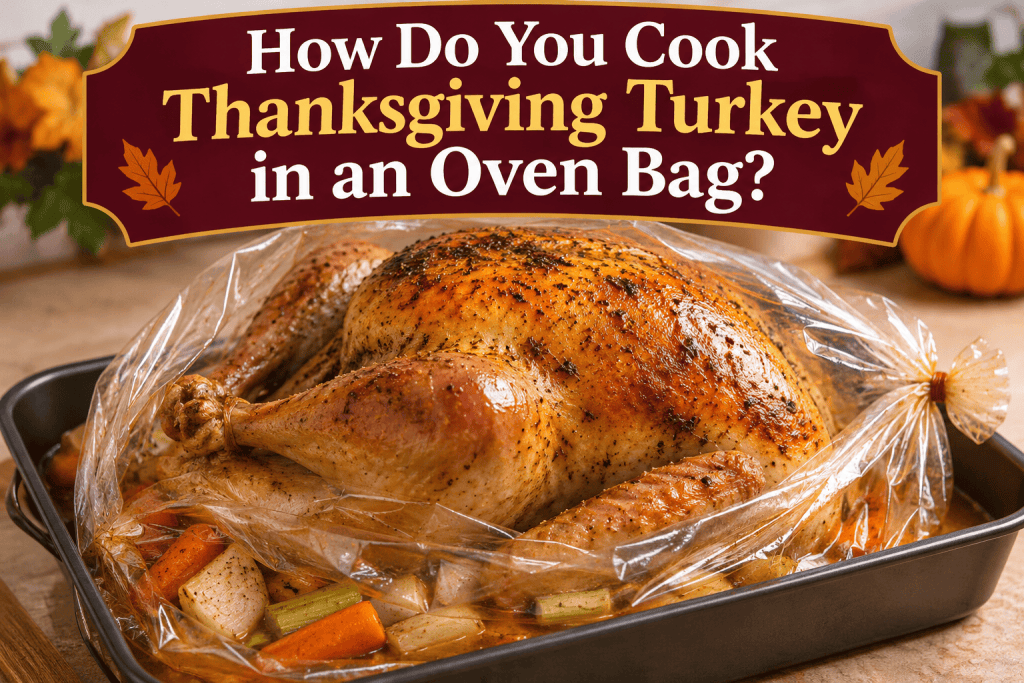
Cooking Thanksgiving turkey in an oven bag is one of the easiest ways to prepare a juicy, tender, and flavorful holiday turkey without constantly checking the oven or worrying about dry meat. Oven bags help trap moisture, circulate heat around the turkey, and reduce the amount of cleanup required after Thanksgiving dinner.
For anyone preparing Thanksgiving dinner for the first time, cooking a turkey in an oven bag can make the process less intimidating. Instead of repeatedly basting the bird or covering it with aluminum foil, you can season the turkey, place it inside a specially designed roasting bag, and let the oven do most of the work.
However, there are a few important techniques to understand before getting started. Choosing the correct oven bag, preparing the turkey properly, selecting the right cooking temperature, and checking the internal temperature all contribute to a successful Thanksgiving meal.
This guide explains how to cook Thanksgiving turkey in an oven bag, how long it takes, what seasonings work best, and how to avoid common mistakes.
What Is an Oven Bag for Cooking Turkey?
An oven bag is a heat-resistant cooking bag designed specifically for roasting meats and poultry inside a conventional oven.
Unlike ordinary plastic bags, oven roasting bags are manufactured from materials designed to withstand the temperatures specified on their packaging.
When a turkey cooks inside an oven bag, moisture released from the meat and vegetables remains largely contained within the bag. This creates a humid cooking environment that helps reduce moisture loss.
The benefits of cooking Thanksgiving turkey in an oven bag include:
-
Helping keep turkey breast meat moist and tender.
-
Reducing the need for frequent basting.
-
Making cleanup easier by containing cooking juices.
-
Helping the turkey cook efficiently.
-
Collecting flavorful drippings for homemade gravy.
-
Reducing splattering inside the oven.
Although oven bags help retain moisture, they do not guarantee perfectly cooked turkey. Using a meat thermometer remains essential.
What Ingredients Do You Need to Cook Thanksgiving Turkey in an Oven Bag?
You do not need complicated ingredients to make a delicious oven-bag turkey. A few traditional seasonings, fresh vegetables, and butter can create excellent flavor.
Ingredients
For one 12–16-pound Thanksgiving turkey
-
1 whole turkey, completely thawed
-
4 tablespoons unsalted butter, softened
-
2 tablespoons olive oil
-
1 tablespoon kosher salt, adjusted for pre-brined or enhanced turkey
-
2 teaspoons freshly ground black pepper
-
2 teaspoons garlic powder
-
2 teaspoons onion powder
-
1 teaspoon paprika
-
1 teaspoon dried thyme
-
1 teaspoon dried rosemary
-
1 teaspoon dried sage
-
1 large onion, quartered
-
2 celery stalks, cut into pieces
-
2 carrots, cut into pieces
-
1 lemon, halved
-
3 garlic cloves
-
1 tablespoon all-purpose flour, if directed by the oven bag manufacturer
-
1 large oven roasting bag rated for turkey
Equipment
You will also need a roasting pan at least 2 inches deep, paper towels, kitchen scissors, an instant-read meat thermometer, and a carving knife.
Always use a bag specifically labeled for oven roasting. Ordinary plastic storage bags, trash bags, and slow-cooker liners are not appropriate substitutes.
How Do You Prepare a Thanksgiving Turkey for an Oven Bag?
Proper preparation helps ensure that your turkey cooks evenly and develops delicious flavor.
Step 1: Completely Thaw the Turkey
If your Thanksgiving turkey is frozen, thaw it completely before cooking.
The safest way to thaw a turkey is in the refrigerator at 40°F or below.
Allow approximately 24 hours of refrigerator thawing for every 4–5 pounds of turkey.
For example:
| Turkey weight | Refrigerator thawing time |
|---|---|
| 4–12 pounds | 1–3 days |
| 12–16 pounds | 3–4 days |
| 16–20 pounds | 4–5 days |
| 20–24 pounds | 5–6 days |
Keep the turkey in its original packaging and place it on a tray to catch any juices.
Never thaw a turkey on the kitchen counter.
Step 2: Remove the Giblets and Neck
Once the turkey is completely thawed, remove it from its packaging.
Check both cavities for the giblets and neck. These are sometimes packaged separately inside the turkey.
Remove them before seasoning or roasting.
Do not rinse the turkey under running water. Washing raw poultry can spread bacteria around the sink and surrounding kitchen surfaces.
Instead, use paper towels to pat the turkey dry.
Step 3: Season the Turkey
Combine the softened butter, olive oil, garlic powder, onion powder, paprika, thyme, rosemary, sage, salt, and black pepper in a small bowl.
Gently loosen the skin over the turkey breast using your fingers.
Spread some of the seasoned butter underneath the skin, directly onto the breast meat.
Rub the remaining mixture over the outside of the turkey, including the legs and wings.
This method helps season the meat while adding richness and flavor.
If your turkey has already been brined or injected with a salt solution, reduce the amount of additional salt.
Step 4: Add Aromatic Vegetables
Place the onion, celery, carrots, garlic, and lemon inside the turkey cavity or around the turkey inside the roasting bag.
These ingredients release flavor as the turkey cooks.
Avoid tightly packing the cavity because proper heat circulation is important for even cooking.
How Do You Cook Thanksgiving Turkey in an Oven Bag Step by Step?
Once your turkey is prepared and seasoned, the roasting process is relatively simple.
Step 1: Preheat the Oven to 350°F
Preheat your oven to 350°F, provided this temperature is recommended by your oven bag manufacturer.
This is a commonly recommended roasting temperature for oven-bag turkey.
Position the oven rack low enough to accommodate the roasting pan and inflated bag without allowing the bag to touch the oven walls, racks, or heating elements.
Step 2: Prepare the Oven Bag
Place the oven bag inside a roasting pan that is at least 2 inches deep.
Follow the manufacturer’s instructions for preparing the bag.
Some popular oven roasting bags require adding 1 tablespoon of flour and shaking the bag to distribute it before adding the turkey.
This step helps prevent the bag from bursting during cooking.
Use the flour only as directed by the manufacturer.
Step 3: Place the Turkey Inside the Bag
Carefully position the seasoned turkey inside the oven bag with the breast facing upward.
Arrange any remaining vegetables around the turkey.
Make sure the turkey fits comfortably inside the bag without excessive stretching.
Step 4: Secure the Bag
Close the oven bag using the heat-resistant tie provided with the packaging.
Do not substitute ordinary plastic ties or materials not approved for oven use.
Follow the manufacturer’s directions for leaving enough room for the bag to expand during roasting.
Step 5: Cut Ventilation Slits
Many oven roasting bags require several small slits near the top.
For example, some manufacturers recommend cutting six half-inch slits to allow steam to escape.
Always follow the instructions supplied with your specific bag.
Proper ventilation helps prevent excessive pressure from building inside.
Step 6: Roast the Turkey
Place the roasting pan in the preheated oven.
Allow the turkey to roast according to the approximate cooking time recommended for its weight.
Avoid opening the oven repeatedly because doing so releases heat and can affect cooking time.
Begin checking the internal temperature before the earliest expected finishing time.
Step 7: Check the Internal Temperature
The turkey is safe to eat when the thickest part of the breast, innermost part of the thigh, and innermost part of the wing reach at least 165°F.
Insert a meat thermometer into the meat without touching bone.
Never rely solely on cooking time or the color of the juices.
Step 8: Rest Before Carving
Once the turkey reaches the proper temperature, remove the roasting pan from the oven.
Carefully open the bag, directing escaping steam away from your face and hands.
Transfer the turkey to a carving board and allow it to rest for approximately 20–30 minutes before carving.
Resting helps the juices redistribute throughout the meat.
How Long Does It Take to Cook a Turkey in an Oven Bag?
One of the biggest advantages of oven-bag cooking is that it can reduce roasting time compared with some traditional uncovered roasting methods.
However, cooking times vary depending on the turkey’s weight, oven performance, and the manufacturer’s instructions.
The following times are approximate guidelines for an unstuffed turkey roasted at 350°F in an oven bag.
| Turkey weight | Approximate cooking time |
|---|---|
| 8–12 pounds | 1½–2 hours |
| 12–16 pounds | 2–2¼ hours |
| 16–20 pounds | 2¼–2½ hours |
| 20–24 pounds | 2½–3 hours |
These times are planning estimates, not guarantees.
Always follow your oven bag’s weight and timing recommendations and confirm doneness with a thermometer.
A turkey may finish earlier or later than expected.
Should You Put Butter on a Turkey Before Cooking It in an Oven Bag?
Yes. Butter is an excellent addition to Thanksgiving turkey cooked in an oven bag.
Butter adds richness, helps distribute seasonings, and contributes to the flavor of the cooking juices.
For particularly flavorful turkey breast, gently spread softened butter underneath the skin before roasting.
You can also combine butter with herbs such as rosemary, thyme, sage, and parsley.
Although butter adds flavor, the oven bag itself helps create the moist roasting environment.
You do not need excessive amounts of butter to achieve tender turkey.
Do You Need to Add Water to an Oven Bag When Cooking Turkey?
Usually, no.
A whole turkey naturally releases moisture and juices as it cooks.
The oven bag helps retain much of that moisture, creating a humid environment around the meat.
Adding unnecessary water may dilute the flavorful drippings that collect at the bottom of the bag.
However, always follow the manufacturer’s directions if your specific oven bag recipe calls for additional liquid.
For most traditional Thanksgiving turkey recipes, the turkey’s natural juices and aromatic vegetables provide sufficient moisture.
Do You Need to Baste a Turkey Cooked in an Oven Bag?
No. Frequent basting is generally unnecessary when cooking turkey in an oven bag.
During roasting, moisture collects inside the bag and helps prevent the turkey from drying out.
This is one of the main reasons oven bags are popular for Thanksgiving cooking.
Traditional uncovered turkey roasting sometimes involves repeatedly opening the oven and spooning pan juices over the meat.
With an oven bag, you can usually leave the turkey undisturbed until it is time to check the temperature.
This saves time and helps maintain a consistent oven temperature.
Will a Turkey Brown Inside an Oven Bag?
Yes, a turkey can develop a golden-brown appearance inside an oven bag.
However, the skin may not become as crispy as turkey roasted uncovered.
Because the bag traps moisture, the cooking environment is more humid.
This is excellent for retaining moisture in the meat but less effective for producing very crisp skin.
If crispy turkey skin is important to your Thanksgiving dinner, traditional uncovered roasting may provide better results.
Some cooks open the bag near the end of roasting to encourage browning, but this should only be done if the manufacturer’s instructions permit it.
Never place the oven bag under the broiler or expose it to temperatures above its rated limit.
Can You Cook a Stuffed Turkey in an Oven Bag?
Some oven bag manufacturers provide instructions for cooking stuffed turkeys.
However, cooking stuffing separately is generally the easier and more reliable approach.
When stuffing is cooked inside a turkey, the center of the stuffing must reach at least 165°F, along with the required portions of the turkey.
This can create a challenge because the turkey breast may become overcooked while waiting for the stuffing to reach a safe temperature.
Preparing stuffing in a separate baking dish gives you more control over both dishes.
For Thanksgiving dinner, consider cooking an unstuffed turkey in the oven bag and baking the stuffing separately.
How Do You Make Gravy From Turkey Oven Bag Drippings?
One of the best benefits of cooking turkey in an oven bag is collecting the flavorful juices left behind after roasting.
These drippings can become the base for homemade Thanksgiving turkey gravy.
Ingredients for Turkey Gravy
-
2 cups turkey drippings, with broth added if needed
-
3 tablespoons turkey fat or butter
-
3 tablespoons all-purpose flour
-
Salt and black pepper to taste
Instructions
-
Carefully pour the turkey drippings from the oven bag into a heat-safe container.
-
Allow the fat to separate from the juices.
-
Measure 3 tablespoons of fat or use butter if necessary.
-
Heat the fat in a saucepan over medium heat.
-
Whisk in the flour and cook for approximately 1–2 minutes.
-
Gradually add 2 cups of drippings and broth while whisking continuously.
-
Simmer until the gravy thickens.
-
Taste and adjust the seasoning.
The vegetables, herbs, and turkey juices create a flavorful base that works beautifully with mashed potatoes, stuffing, and sliced turkey.
What Are the Most Common Mistakes When Cooking Turkey in an Oven Bag?
Although oven-bag roasting is straightforward, a few mistakes can affect the finished turkey.
Using the Wrong Type of Bag
Never use an ordinary plastic bag instead of a specially manufactured oven roasting bag.
Only use products designed for oven cooking.
Overcrowding the Roasting Pan
The bag needs enough room to expand safely.
Make sure it does not touch the oven walls, heating elements, or other hot surfaces.
Forgetting the Ventilation Slits
If your bag requires ventilation slits, forgetting them can cause excessive pressure buildup.
Always follow the manufacturer’s directions.
Overcooking the Turkey
An oven bag can help retain moisture, but it cannot completely prevent overcooking.
Turkey breast meat can still become dry if cooked too long.
Use a reliable meat thermometer.
Opening the Bag Too Quickly
Hot steam accumulates inside the bag during cooking.
Opening it carelessly can cause burns.
Always use oven mitts and keep your face and hands away from escaping steam.
Skipping the Resting Period
Carving immediately after roasting can cause more juices to run out onto the cutting board.
Allow the turkey to rest before slicing.
Is Cooking Turkey in an Oven Bag Better Than Roasting It Normally?
Both methods can produce delicious Thanksgiving turkey, but they offer different advantages.
| Feature | Oven bag turkey | Traditional roasting |
|---|---|---|
| Moisture retention | Excellent | Good with proper technique |
| Crispy skin | Less crispy | Usually crispier |
| Basting | Usually unnecessary | Optional |
| Cleanup | Easier | More pan cleanup |
| Cooking time | Often shorter | Often longer |
| Browning | Moderate to good | Excellent |
| Beginner-friendly | Very | Moderate |
If your main goal is juicy turkey with minimal effort, an oven bag is a practical choice.
If you prefer deeply browned, crispy skin, traditional uncovered roasting may be more suitable.
Neither method automatically guarantees better flavor. Seasoning, temperature control, and avoiding overcooking matter more than the roasting method alone.
Can You Prepare an Oven Bag Turkey the Night Before Thanksgiving?
Yes. You can complete much of the preparation the evening before Thanksgiving.
Season the turkey with butter, herbs, and spices, then cover it and refrigerate it at 40°F or below.
Keep it refrigerated until you are ready to roast it.
For convenience, chop your onions, celery, carrots, and other vegetables the night before as well.
However, it is generally best to prepare and fill the oven bag shortly before cooking unless the manufacturer specifically approves advance assembly.
Never leave a seasoned raw turkey at room temperature overnight.
Preparing ingredients ahead of time can make Thanksgiving morning significantly less stressful.
How Do You Keep Turkey Breast Moist When Cooking in an Oven Bag?
Turkey breast contains less fat than dark meat, making it more vulnerable to drying out.
Fortunately, oven-bag roasting helps reduce moisture loss.
For the juiciest results, use several techniques together.
Spread seasoned butter underneath the breast skin, avoid cooking at excessively high temperatures, and begin checking the internal temperature early.
Most importantly, remove the turkey once the required internal temperatures have been reached.
Resting the turkey before carving also helps retain juices.
An oven bag provides additional protection against moisture loss, but accurate temperature monitoring is still the most important step.
Frequently Asked Questions About Cooking Thanksgiving Turkey in an Oven Bag
What temperature should you cook turkey in an oven bag?
A temperature of 350°F is commonly recommended for roasting turkey in an oven bag. Always verify the temperature specified by your oven bag manufacturer.
Do you put the turkey breast up or down in an oven bag?
Place the turkey breast-side up inside the bag. This is the standard position for most oven-bag turkey roasting instructions.
Can you cook a frozen turkey in an oven bag?
You should completely thaw the turkey before following a standard oven-bag roasting recipe. Frozen turkey requires different cooking considerations, and the bag manufacturer may not approve that method.
Does cooking turkey in an oven bag make it cook faster?
Often, yes. Oven bags can shorten cooking time compared with some traditional roasting methods. However, the actual time depends on turkey size and oven conditions.
Can you use an oven bag in a convection oven?
Only if the oven bag manufacturer specifically permits convection cooking. Some products have restrictions because of circulating hot air and proximity to heating elements.
Can you reuse a turkey oven bag?
No. Oven roasting bags are generally intended for single use and should be discarded after cooking.
How do you know when an oven-bag turkey is done?
Use a food thermometer to verify that the thickest breast area, innermost thigh, and innermost wing have reached at least 165°F.
Do you need a roasting rack inside an oven bag?
Usually, no. Most oven-bag recipes position the turkey directly inside the bag in a deep roasting pan, sometimes on a bed of vegetables. Follow your bag manufacturer’s directions.
Final Thoughts: Is an Oven Bag a Good Way to Cook Thanksgiving Turkey?
Cooking Thanksgiving turkey in an oven bag is an excellent option for anyone who wants a tender, juicy holiday turkey without complicated roasting techniques.
The bag helps retain moisture, reduces the need for basting, and makes cleanup easier. It also collects flavorful cooking juices that can be transformed into homemade Thanksgiving gravy.
For the best results, start with a completely thawed turkey, season it generously, follow the oven bag manufacturer’s instructions, and roast at the recommended temperature.
Most importantly, use a meat thermometer to ensure the turkey reaches a safe internal temperature of 165°F in all required locations.
Whether you are preparing your first Thanksgiving dinner or simply looking for an easier way to roast your holiday bird, cooking turkey in an oven bag can help you serve a delicious centerpiece with less effort and more confidence.






Leave a Reply