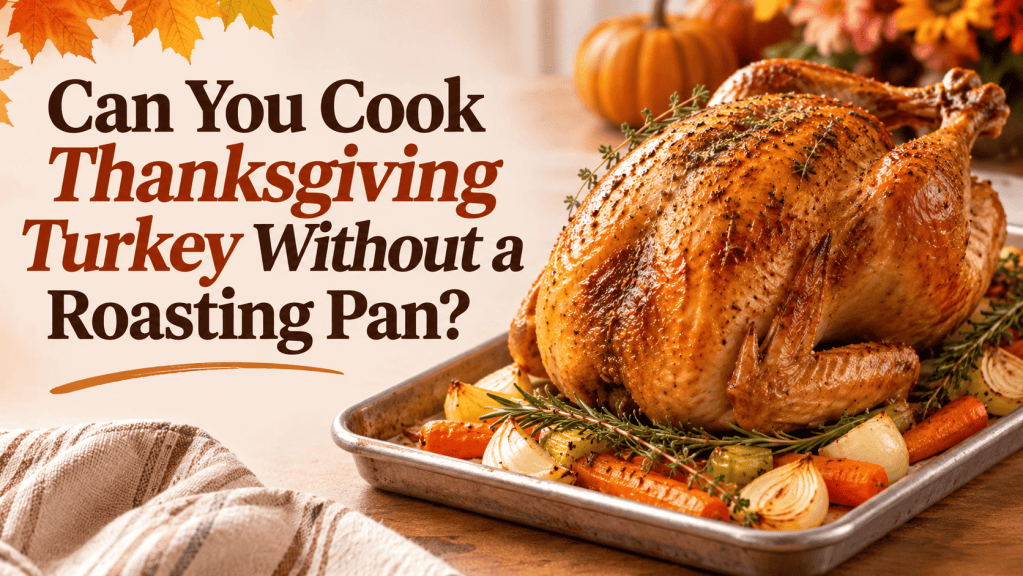
Thanksgiving dinner often centers around a beautifully roasted turkey with golden-brown skin, tender meat, and delicious flavor. Traditionally, many home cooks use a large roasting pan to prepare their holiday turkey. However, not everyone owns a roasting pan, especially those cooking Thanksgiving dinner for the first time or working with limited kitchen equipment.
The good news is that you can absolutely cook Thanksgiving turkey without a roasting pan. In fact, several common kitchen items can work just as well when used correctly.
Whether you have a rimmed baking sheet, a large casserole dish, a cast-iron skillet, or a disposable aluminum pan, you can still prepare a delicious Thanksgiving turkey.
The key is choosing an oven-safe container that can support the turkey’s weight, contain the cooking juices, and allow heat to circulate properly.
This guide explains the best roasting pan alternatives, how to use them safely, and how to achieve juicy meat and crispy skin without purchasing expensive cookware.
Can You Really Roast a Turkey Without a Roasting Pan?
Yes, roasting a Thanksgiving turkey without a traditional roasting pan is completely possible.
A roasting pan serves several purposes during cooking. It holds the turkey securely, collects drippings, provides space for vegetables, and allows hot air to circulate around the bird.
However, these functions can be accomplished with other oven-safe cookware.
The most important requirements are:
-
A sturdy cooking vessel large enough to hold the turkey.
-
Enough depth to prevent juices from spilling into the oven.
-
Heat-resistant materials suitable for the roasting temperature.
-
A stable surface that can safely support the turkey’s weight.
-
Enough oven clearance for proper heat circulation.
You also need to ensure that the turkey is elevated slightly above the bottom of the cooking vessel when possible.
This helps prevent the underside from sitting directly in cooking juices and encourages more even roasting.
With the right setup, you can prepare a flavorful Thanksgiving turkey without a traditional roasting pan.
What Can You Use Instead of a Turkey Roasting Pan?
Several everyday kitchen items can replace a roasting pan.
The best choice depends on the size of your turkey, the equipment available, and how much cooking space you have.
1. Rimmed Baking Sheet
A heavy-duty rimmed baking sheet is one of the most convenient alternatives for roasting a smaller Thanksgiving turkey.
Many households already own one, making it an affordable option.
A rimmed baking sheet works particularly well for smaller birds because its low sides allow hot air to circulate around the turkey.
This can encourage more even browning and help produce crispy skin.
However, the sheet must have raised edges to catch cooking juices.
A completely flat cookie sheet should never be used because turkey drippings can spill into the oven.
Best for: Smaller turkeys, particularly birds weighing approximately 8–12 pounds, when the sheet is large and sturdy enough.
How to use it:
-
Choose a heavy-duty rimmed baking sheet.
-
Place an oven-safe wire rack inside, if available.
-
Position the turkey breast-side up on the rack.
-
Season the turkey as desired.
-
Roast until the thickest parts reach a safe internal temperature.
Because baking sheets have shallow sides, monitor the amount of liquid collecting during cooking.
If the sheet becomes too full, carefully remove excess drippings using a heat-safe method.
For larger turkeys that produce substantial drippings, a deeper pan is generally safer.
2. Large Casserole Dish
A large oven-safe casserole dish can also work as a substitute for a roasting pan.
Casserole dishes typically have higher sides than baking sheets, helping contain cooking juices.
This makes them useful for roasting smaller turkeys or turkey breasts.
Glass and ceramic casserole dishes may be suitable if they are specifically rated for oven roasting at the temperature you intend to use.
However, these materials require extra care.
Avoid sudden temperature changes, which can cause some glass or ceramic dishes to crack.
Best for: Small whole turkeys and turkey breasts that fit comfortably inside the dish.
Make sure the turkey does not press tightly against the sides.
Leaving some space around the bird allows heat to circulate more effectively.
3. Cast-Iron Skillet
A large cast-iron skillet is another excellent option for cooking Thanksgiving turkey without a roasting pan.
Cast iron retains heat effectively and can help produce flavorful, browned skin.
It also provides a sturdy cooking surface.
However, most cast-iron skillets are not large enough to accommodate a full-size Thanksgiving turkey.
A large skillet is generally better suited for smaller birds, turkey breasts, or individual turkey portions.
Best for: Small turkeys, turkey breasts, and smaller Thanksgiving meals.
For added flavor, place chopped onions, carrots, and celery beneath the turkey.
These vegetables help elevate the meat slightly while adding flavor to the drippings.
Always check that the skillet’s handles and any other components are oven-safe.
4. Disposable Aluminum Roasting Pan
Disposable aluminum pans are among the most popular alternatives to traditional roasting pans.
They are inexpensive, widely available during the holiday season, and convenient for cleanup.
Many disposable pans are designed specifically for roasting turkey.
However, thin aluminum pans can bend or collapse when carrying a heavy bird.
To prevent accidents, always place the disposable pan on a sturdy metal baking sheet or other suitable support before adding the turkey.
Do not attempt to lift a heavy turkey using only the edges of a flimsy disposable pan.
Best for: Medium and large Thanksgiving turkeys when the pan is appropriately sized, adequately supported, and rated for the load.
A disposable aluminum pan can be especially helpful when preparing Thanksgiving dinner for a large family gathering.
5. Large Oven-Safe Dutch Oven
A large Dutch oven may also work for roasting a smaller Thanksgiving turkey.
Dutch ovens are made from heavy materials that retain heat effectively.
Their high sides help contain drippings and reduce spills.
However, the high walls can restrict airflow around the turkey, making it harder to achieve evenly crispy skin.
For roasting, leave the lid off unless your recipe specifically calls for covered cooking.
Make sure the Dutch oven is large enough to hold the turkey without crowding.
Best for: Small turkeys and turkey breasts.
Check the manufacturer’s oven-temperature rating, especially if the Dutch oven has an enameled finish or a lid with a temperature-limited knob.
How Do You Roast a Turkey Without a Roasting Rack?
A roasting rack is useful because it raises the turkey above the cooking juices.
However, you do not need to purchase one.
Several simple alternatives can help elevate the bird.
Use a Bed of Vegetables
One of the easiest methods is to create a vegetable roasting rack.
Use thick pieces of:
-
Carrots
-
Celery
-
Onions
-
Potatoes
Arrange the vegetables across the bottom of your cooking vessel.
Place the turkey directly on top.
The vegetables create a small amount of separation between the bird and the pan while adding flavor to the drippings.
They can also be used when preparing homemade turkey gravy.
For best results, cut the vegetables into large pieces so they do not collapse too quickly during cooking.
Use an Oven-Safe Wire Rack
If you have a sturdy wire rack that is specifically rated for oven use, it may work inside a rimmed baking sheet or deep baking dish.
Make sure the rack fits securely and can support the turkey’s weight.
Not every cooling rack is designed for oven temperatures, so check the manufacturer’s instructions before using one.
Make a Rack With Aluminum Foil
Heavy-duty aluminum foil can also help elevate a small turkey.
Roll several long pieces of foil into thick, sturdy coils.
Arrange the coils across the bottom of a suitable roasting vessel.
Place the turkey on top, ensuring it remains stable.
This method is better for smaller birds than very heavy turkeys because foil can compress under substantial weight.
How to Cook Thanksgiving Turkey Without a Roasting Pan
Cooking a turkey without a roasting pan follows the same basic principles as traditional oven roasting.
The main difference is how you support the turkey and collect its juices.
Preparation: 20–30 minutes | Cooking: Varies by weight | Oven temperature: 325°F
Ingredients
-
1 whole turkey, approximately 10–12 pounds, fully thawed
-
4 tablespoons unsalted butter, softened
-
2 tablespoons olive oil
-
2 teaspoons kosher salt, or to taste
-
1 teaspoon black pepper
-
1 teaspoon garlic powder
-
1 teaspoon onion powder
-
1 teaspoon paprika
-
1 teaspoon dried thyme
-
1 teaspoon dried rosemary
-
1 large onion, quartered
-
3 carrots, cut into large pieces
-
3 celery stalks, cut into large pieces
-
1 cup low-sodium chicken or turkey broth, optional
Step 1: Preheat the Oven
Preheat your oven to 325°F.
Position the oven rack so the turkey fits comfortably without touching the heating elements or oven walls.
Remove unnecessary oven racks if additional space is needed.
Step 2: Prepare the Cooking Vessel
Choose a sturdy oven-safe pan large enough to hold the turkey.
Place a roasting rack or a layer of chopped vegetables in the bottom.
If using a disposable aluminum pan, place it on a sturdy baking sheet for support.
Step 3: Prepare the Turkey
Remove the turkey from its packaging.
Take out the neck and giblets if they are included.
Pat the turkey dry using paper towels.
Do not wash raw turkey, as splashing water can spread bacteria around the kitchen.
Drying the skin helps encourage browning during roasting.
Step 4: Season the Turkey
Combine the softened butter, olive oil, salt, pepper, garlic powder, onion powder, paprika, thyme, and rosemary.
Rub the mixture over the turkey.
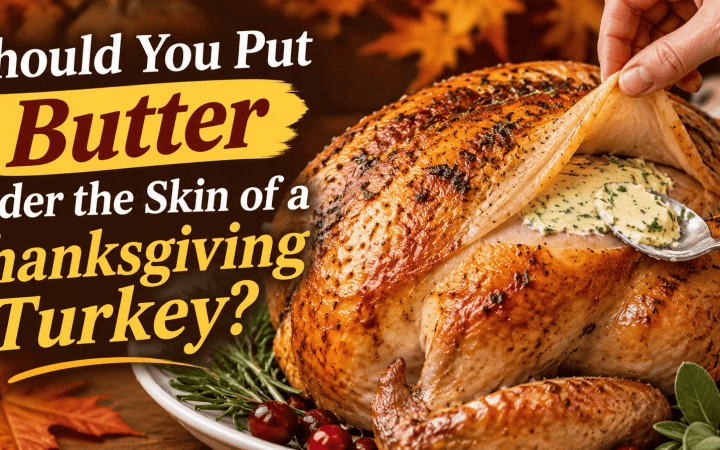
For additional flavor, gently loosen the breast skin and spread some of the seasoned butter underneath.
Make sure the turkey is evenly coated.
Step 5: Position the Turkey
Place the turkey breast-side up on the rack or vegetables.
Tuck the wing tips underneath the bird to reduce burning.
If using broth, add a small amount to the bottom of a deep enough pan without submerging the turkey.
Avoid adding excess liquid, especially when using a shallow baking sheet.
Step 6: Roast the Turkey
Place the turkey in the preheated oven.
Roast at 325°F until it reaches the proper internal temperature.
A fully thawed, unstuffed 10–12-pound turkey typically takes approximately 2¾–3 hours, although actual cooking time varies.
Start checking the temperature before the estimated cooking time ends.
If the skin begins browning too quickly, loosely cover the affected areas with aluminum foil.
Step 7: Check the Internal Temperature
Use a reliable food thermometer.
The turkey must reach 165°F in the thickest part of the breast, the innermost thigh, and the innermost wing, without the thermometer touching bone.
Check multiple locations rather than relying on appearance or cooking time alone.
Step 8: Rest Before Carving
Remove the turkey from the oven once it reaches a safe temperature.
Transfer it carefully to a clean cutting board or platter.
Allow the turkey to rest for approximately 20–30 minutes before carving.
Resting helps reduce moisture loss when the turkey is sliced.
What Temperature Should You Cook Turkey Without a Roasting Pan?
The recommended oven temperature for a traditional whole Thanksgiving turkey is generally 325°F.
This temperature provides a practical balance between cooking the turkey thoroughly and developing browned skin.
You do not need to change the oven temperature simply because you are using a roasting pan alternative.
However, the type of cookware can affect how quickly the turkey cooks.
For example, a shallow metal baking sheet may allow more airflow than a deep casserole dish.
A heavy cast-iron vessel may also transfer heat differently from a thin aluminum pan.
Because of these differences, always rely on the internal temperature rather than cooking time alone.
How Long Does It Take to Cook Turkey Without a Roasting Pan?
Cooking time depends primarily on the turkey’s weight, oven temperature, whether it is stuffed, and the cooking setup.
The following estimates apply to fully thawed, unstuffed whole turkeys roasted at 325°F.
| Turkey weight | Approximate cooking time |
|---|---|
| 8–12 pounds | 2¾–3 hours |
| 12–14 pounds | 3–3¾ hours |
| 14–18 pounds | 3¾–4¼ hours |
| 18–20 pounds | 4¼–4½ hours |
| 20–24 pounds | 4½–5 hours |
These are planning estimates, not guarantees.
Start checking the turkey before the lower end of the estimated range.
The turkey is ready only when all required areas reach 165°F.
Can You Cook a Turkey Directly on a Baking Sheet?
Yes, but there are important limitations.
A heavy-duty rimmed baking sheet can work well for a small turkey.
However, the baking sheet must be large enough to support the entire bird without overhanging edges.
It must also be sturdy enough to hold the turkey and collected drippings.
A roasting rack or vegetable base is helpful because it raises the bird above the juices.
A shallow baking sheet is generally not the best choice for a large turkey because overflowing drippings can create a mess and potentially cause burns or an oven fire.
If you are cooking a turkey weighing more than approximately 12 pounds, a deeper, sturdy roasting vessel is often the safer option.
Can You Cook Thanksgiving Turkey in a Glass Baking Dish?
Yes, provided the glass dish is specifically approved by its manufacturer for the intended oven temperature and roasting use.
A glass baking dish can hold a smaller turkey or turkey breast.
However, glass cookware has some limitations.
Glass does not respond to temperature changes in the same way as metal.
Sudden temperature changes can cause thermal shock, potentially cracking or shattering the dish.
To reduce this risk, follow the manufacturer’s instructions, avoid adding cold liquid to hot glass, and never place a hot glass dish on a wet or cold surface.
Do not use glass cookware under the broiler unless the manufacturer specifically permits it.
For a large whole turkey, a sturdy metal pan is generally more practical.
How Do You Keep Turkey Moist Without a Roasting Pan?
Keeping Thanksgiving turkey moist has more to do with cooking technique than the type of roasting pan.
Several methods can help prevent dry turkey.
Use Butter or Oil
Coating the turkey with butter or olive oil helps promote browning and adds flavor.
Butter placed beneath the breast skin can also improve the richness of the finished meat.
Avoid Overcooking
Overcooking is one of the biggest causes of dry turkey.
Use a food thermometer and check the temperature in multiple locations.
Do not continue roasting simply because a recipe lists a longer cooking time.
Roast at a Consistent Temperature
A steady oven temperature helps the turkey cook predictably.
Avoid repeatedly opening the oven door, which allows heat to escape.
Rest the Turkey
Allowing the turkey to rest before carving helps retain more of its juices.
Cutting immediately after roasting can cause more moisture to escape onto the cutting board.
Choose an Appropriate Pan
A pan that is too small may crowd the turkey and interfere with heat circulation.
Choose cookware that allows the turkey to sit securely with some space around it.
How Do You Get Crispy Turkey Skin Without a Roasting Pan?
Crispy turkey skin is possible even without traditional roasting equipment.
In fact, shallow cooking vessels can sometimes encourage better browning because more of the skin is exposed to circulating oven heat.
To improve crispiness, pat the turkey completely dry before seasoning.
Apply a light coating of butter or oil.
Keep the turkey elevated above collected juices when possible.
Avoid pouring broth directly over the skin during roasting.
Roast uncovered unless the skin starts browning too quickly.
If the turkey needs additional browning near the end of cooking, carefully monitor it rather than dramatically increasing the temperature.
The goal is to achieve golden-brown skin without overcooking the meat.
What Is the Best Roasting Pan Alternative for a Large Turkey?
For a large Thanksgiving turkey, a sturdy deep metal pan is usually the most practical substitute.
A heavy-duty disposable aluminum roasting pan can work when properly supported.
The most important consideration is stability.
Large turkeys are heavy, and their weight increases the difficulty of safely moving the cooking vessel.
Choose a pan rated to hold the turkey and cooking juices.
Place disposable pans on a sturdy metal baking sheet or other suitable oven-safe support.
Avoid lifting flimsy aluminum pans by their edges.
If your available cookware cannot safely accommodate the turkey, consider cooking the bird in smaller portions or using a different cooking method.
Common Mistakes When Roasting Turkey Without a Roasting Pan
Using alternative cookware is straightforward, but certain mistakes can affect cooking results and safety.
Using a Pan That Is Too Small
A crowded turkey may cook unevenly and can cause drippings to overflow.
Always select cookware with enough space for the bird.
Using a Flat Cookie Sheet
A flat baking sheet without raised edges cannot safely contain turkey drippings.
Always use a rimmed sheet or deeper cooking vessel.
Forgetting to Support Disposable Pans
Thin disposable aluminum pans may bend when carrying a heavy turkey.
Provide adequate support before placing the bird inside.
Adding Too Much Liquid
Excess liquid can overflow a shallow pan and interfere with browning.
Use only as much as the vessel can safely contain.
Relying Only on Cooking Time
Turkey cooking times are estimates.
Always check internal temperature with a food thermometer.
Using Cookware That Is Not Oven-Safe
Some racks, handles, lids, and baking dishes have temperature limitations.
Verify that every component is suitable for the oven temperature before cooking.
Frequently Asked Questions
Can I Roast a Turkey in a Regular Baking Pan?
Yes. A sturdy, appropriately sized metal baking pan with raised sides can be used to roast a turkey. Make sure it can support the bird and contain the cooking juices.
Can I Use a Disposable Aluminum Pan for Thanksgiving Turkey?
Yes. Disposable aluminum roasting pans are a convenient alternative, particularly when supported by a sturdy baking sheet. Choose one rated for the turkey’s size and weight.
Do I Need a Rack to Roast Thanksgiving Turkey?
No. A roasting rack is helpful but not required. Large pieces of onions, carrots, and celery can create a simple vegetable base beneath the turkey.
Can I Cook a Turkey in a Casserole Dish?
Yes, if the dish is large enough and rated for the intended oven temperature. Casserole dishes generally work best for smaller turkeys and turkey breasts.
Can I Roast a Turkey Without Foil?
Yes. Turkey can be roasted uncovered. Foil is useful when the skin begins browning too quickly, but it is not required throughout cooking.
Can I Cook a Turkey in a Dutch Oven Without the Lid?
Yes. A large oven-safe Dutch oven can be used for a smaller turkey. Leaving the lid off allows more moisture to escape and can help the skin brown.
Is a Baking Sheet Better Than a Roasting Pan?
Not necessarily. A rimmed baking sheet can be convenient for smaller birds and may encourage browning, but a deep roasting pan is generally better suited for large turkeys and substantial amounts of drippings.
Will Turkey Taste Different Without a Roasting Pan?
Not significantly when the turkey is properly seasoned and cooked. Flavor depends more on seasoning, cooking temperature, doneness, and preparation than on whether a traditional roasting pan is used.
Final Thoughts: Can You Cook Thanksgiving Turkey Without a Roasting Pan?
You do not need expensive roasting equipment to prepare a delicious Thanksgiving turkey.
A heavy-duty rimmed baking sheet, large casserole dish, cast-iron skillet, Dutch oven, or properly supported disposable aluminum pan can all serve as alternatives when appropriately sized and oven-safe.
For smaller turkeys, a rimmed baking sheet with an oven-safe rack or vegetable base is often a convenient solution.
For larger birds, a sturdy deep metal pan is generally the safer choice because it can better contain drippings and support the turkey’s weight.
Regardless of the cooking vessel, the most important steps remain the same: season the turkey thoroughly, maintain a consistent oven temperature, monitor the internal temperature, and allow the meat to rest before carving.
The bottom line is simple: You can cook a juicy, golden-brown Thanksgiving turkey without owning a traditional roasting pan. With the right equipment and a little preparation, your holiday centerpiece can turn out beautifully using cookware you may already have in your kitchen.


Leave a Reply