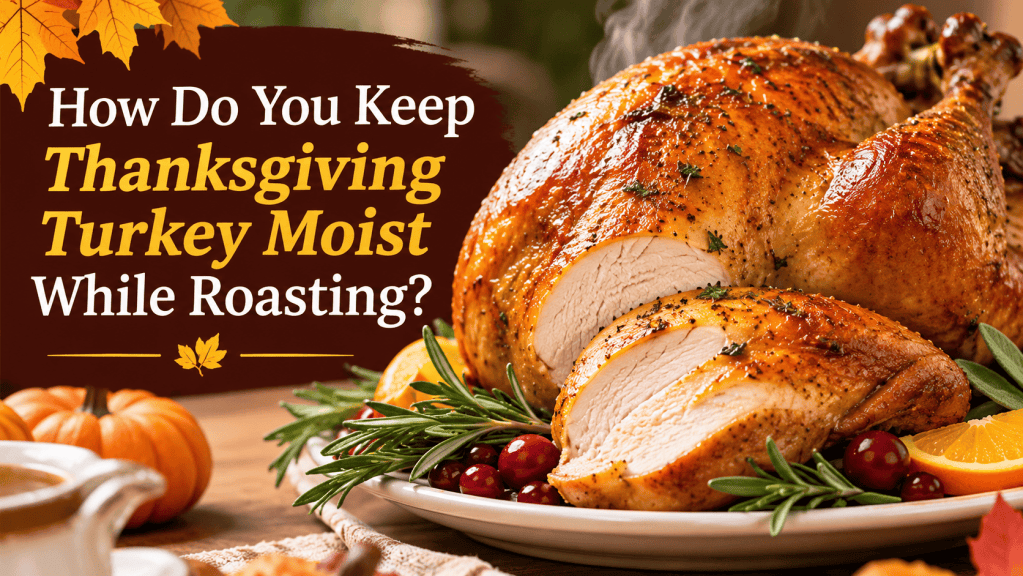
Thanksgiving turkey is often the centerpiece of the holiday dinner, but keeping it moist and juicy can be one of the biggest challenges for home cooks. Nobody wants to spend hours preparing a beautiful turkey only to discover that the breast meat is dry, tough, or lacking flavor.
Fortunately, roasting a juicy Thanksgiving turkey does not require professional cooking skills or complicated techniques. The secret comes down to proper preparation, seasoning, temperature control, and allowing the turkey to rest before carving.
Whether you are preparing your first Thanksgiving dinner or looking to improve your traditional holiday recipe, understanding how to keep turkey moist while roasting can make a significant difference.
This guide explains the best methods for preventing dry turkey, including brining, buttering, roasting temperatures, thermometer placement, and resting techniques.
Why Does Thanksgiving Turkey Dry Out While Roasting?
Turkey becomes dry when too much moisture is lost during cooking. This happens most often when the meat is exposed to heat for longer than necessary.
Turkey breast meat is particularly vulnerable because it contains less fat than dark meat. The legs and thighs can tolerate longer cooking times, while the breast can become dry if its temperature rises too high.
Several common mistakes contribute to dry Thanksgiving turkey:
-
Roasting the turkey longer than necessary.
-
Using an oven temperature that is too high for the entire cooking process.
-
Failing to monitor the internal temperature.
-
Cooking a partially frozen turkey.
-
Carving immediately after removing the turkey from the oven.
-
Relying entirely on cooking time instead of a meat thermometer.
The most effective way to prevent these problems is to prepare the turkey properly and monitor its temperature throughout roasting.
1. Brine Your Turkey Before Roasting
Brining is one of the most effective ways to help Thanksgiving turkey retain moisture.
A brine uses salt to season the meat and improve its ability to retain moisture during cooking. This can make the turkey more forgiving if it cooks slightly longer than expected.
There are two main brining methods.
Wet Brining
Wet brining involves soaking the turkey in a saltwater solution before roasting.
A basic wet brine may contain:
-
1 gallon cold water
-
1 cup kosher salt, adjusted for the salt brand
-
½ cup brown sugar, optional
-
4 garlic cloves
-
2 sprigs fresh rosemary
-
4 sprigs fresh thyme
-
2 bay leaves
-
1 tablespoon whole black peppercorns
Dissolve the salt and sugar in a portion of the water, then cool the mixture completely before adding the turkey.
Submerge the turkey in the brine and refrigerate at 40°F or below for approximately 12 to 24 hours, depending on its size and the recipe.
After brining, remove the turkey, discard the brine, and pat the skin dry with paper towels.
Do not rinse raw turkey because splashing water can spread bacteria around the kitchen.
Dry Brining
Dry brining is another excellent method, especially when refrigerator space is limited.
Instead of soaking the turkey in liquid, you season it directly with salt.
For a turkey that has not already been salted or enhanced, use approximately ½ to ¾ teaspoon Diamond Crystal kosher salt per pound, adjusting for the salt brand.
Apply the salt evenly over the turkey, including the breast, thighs, and legs.
Place the turkey on a rack over a baking sheet and refrigerate uncovered for 24 to 48 hours.
Dry brining helps season the meat while encouraging the skin to dry out, making it easier to achieve a golden, crispy exterior.
Important: Always check the turkey packaging before brining. Self-basting, enhanced, or kosher turkeys may already contain added salt. Additional brining can make them excessively salty.
2. Rub Butter Under the Turkey Skin
Butter is a popular ingredient for keeping Thanksgiving turkey flavorful and tender.
Although butter cannot completely prevent moisture loss from overcooking, it adds richness and helps create a delicious roasted exterior.
One particularly effective technique is spreading softened butter underneath the turkey’s skin.
How to Make Herb Butter for Turkey
Combine:
-
½ cup unsalted butter, softened
-
2 teaspoons chopped fresh rosemary
-
2 teaspoons chopped fresh thyme
-
1 teaspoon garlic powder
-
½ teaspoon black pepper
-
1 teaspoon lemon zest
Mix until the ingredients are evenly combined.
Gently loosen the skin over the turkey breast using your fingers, taking care not to tear it.
Spread a generous portion of the herb butter directly over the breast meat beneath the skin.
Rub the remaining butter over the outside of the turkey.
This creates a flavorful coating that enhances the turkey as it roasts.
For a dry-brined turkey, use unsalted butter to avoid adding too much salt.
3. Roast the Turkey at the Right Temperature
Oven temperature plays a major role in whether Thanksgiving turkey turns out juicy or dry.
A moderate roasting temperature allows the turkey to cook evenly without exposing the exterior to unnecessarily intense heat.
For most whole turkeys, 325°F to 350°F is a reliable roasting range.
Roasting at 325°F is particularly useful for larger birds because it provides a steady cooking environment.
Roasting at 350°F can help the skin brown more quickly, although the turkey should still be monitored carefully.
Approximate Thanksgiving Turkey Roasting Times
The following estimates are for fully thawed, unstuffed turkeys roasted at 325°F.
| Turkey weight | Approximate roasting time |
|---|---|
| 8–12 pounds | 2¾–3 hours |
| 12–14 pounds | 3–3¾ hours |
| 14–18 pounds | 3¾–4¼ hours |
| 18–20 pounds | 4¼–4½ hours |
| 20–24 pounds | 4½–5 hours |
These are planning estimates, not guarantees. Actual cooking time depends on the turkey’s shape, oven accuracy, starting temperature, and other factors.
Always use a food thermometer to determine when the turkey is done.
4. Use a Meat Thermometer to Prevent Overcooking
One of the biggest secrets to moist Thanksgiving turkey is knowing exactly when to remove it from the oven.
Many home cooks rely on the turkey’s appearance or the number of hours it has been roasting.
Unfortunately, golden skin does not necessarily mean the turkey is fully cooked, and roasting for too long can quickly dry out the breast.
The USDA recommends cooking turkey to a minimum internal temperature of 165°F.
Check the temperature in three locations:
-
The thickest part of the breast.
-
The innermost part of the thigh.
-
The innermost part of the wing.
Avoid touching bone with the thermometer probe because this can produce an inaccurate reading.
All three locations should reach 165°F.
Dark meat may become more tender at temperatures above 165°F, but the breast should not be cooked unnecessarily beyond its safe temperature.
A reliable digital thermometer is one of the most valuable tools for preparing a juicy Thanksgiving turkey.
5. Protect the Turkey Breast With Aluminum Foil
Turkey breast cooks differently from the thighs and drumsticks.
Because white meat is leaner, it can become dry while the darker meat continues cooking.
Aluminum foil can help manage this problem.
If the turkey breast begins browning too quickly, loosely cover the breast area with a sheet of foil.
This reduces direct radiant heat exposure and helps prevent the skin from becoming overly dark.
Avoid tightly wrapping the entire turkey throughout roasting, since trapped steam can soften the skin.
For the best results, use foil only when necessary and remove it near the end if additional browning is needed.
Foil is useful for managing browning, but it cannot replace careful temperature monitoring.
6. Should You Baste Thanksgiving Turkey to Keep It Moist?
Basting is a traditional Thanksgiving cooking technique that involves spooning or brushing pan juices over the turkey while it roasts.
Many families consider basting an essential part of preparing holiday turkey.
However, basting does not significantly increase moisture inside the meat.
Most of the liquid remains on the surface, where it contributes flavor and color.
Opening the oven repeatedly can also release heat and extend the roasting process.
If you enjoy basting, do it occasionally rather than every few minutes.
Basting once or twice during roasting is generally sufficient for adding surface flavor.
For a particularly juicy turkey, proper brining and temperature control are more important than frequent basting.
7. Add Aromatics Inside the Turkey Cavity
Adding aromatic ingredients to the turkey cavity is an easy way to enhance flavor during roasting.
Popular Thanksgiving turkey aromatics include:
-
One onion, quartered
-
One lemon, halved
-
Several garlic cloves
-
Fresh rosemary
-
Fresh thyme
-
Fresh sage
-
Celery stalks
-
Carrot pieces
Place the ingredients loosely inside the cavity rather than packing them tightly.
These ingredients contribute aroma and flavor, although they do not directly guarantee moist breast meat.
Avoid overfilling the cavity because this can interfere with even cooking.
For food safety and more predictable roasting, consider preparing traditional bread stuffing separately in a baking dish.
8. Add Broth to the Roasting Pan
Adding a small amount of broth to the bottom of the roasting pan can help prevent drippings from burning and provide a flavorful base for gravy.
Use approximately 1 to 2 cups of low-sodium chicken or turkey broth.
Place the turkey on a roasting rack above the liquid.
This allows hot air to circulate around the bird while keeping the turkey elevated above the pan juices.
Check the pan occasionally and add more liquid if it becomes completely dry.
However, do not submerge the turkey in broth.
Too much liquid can create excessive steam and prevent the skin from becoming crispy.
Broth primarily helps with the pan environment and gravy preparation rather than directly moisturizing the meat.
9. Let the Turkey Rest Before Carving
Resting is one of the most important steps in preparing moist Thanksgiving turkey.
When turkey is removed from the oven, its juices are still moving throughout the meat.
Carving immediately can cause more liquid to escape onto the cutting board.
Allowing the turkey to rest helps reduce moisture loss during slicing.
How Long Should Thanksgiving Turkey Rest?
For most whole Thanksgiving turkeys, a resting period of approximately 20 to 40 minutes works well.
Larger turkeys may benefit from resting toward the longer end of that range.
Place the turkey on a clean cutting board or serving platter and loosely tent it with aluminum foil.
Avoid sealing the foil tightly, which can trap steam and soften the skin.
After resting, carve the turkey using a sharp knife.
For the breast, remove each breast half from the bone and slice across the grain for tender pieces.
Do not leave cooked turkey at room temperature for more than two hours.
10. Consider Spatchcocking for More Even Cooking
Spatchcocking is a technique that involves removing the turkey’s backbone and flattening the bird before roasting.
Although it looks different from a traditional whole roasted Thanksgiving turkey, this method offers several advantages.
A flattened turkey cooks more evenly because the breast and thighs are exposed to heat in a more balanced arrangement.
Spatchcocking can also reduce cooking time and produce crispy skin.
To spatchcock a turkey, use sturdy poultry shears to remove the backbone, then press down on the breastbone to flatten the bird.
Season the turkey and roast it on a large rimmed baking sheet or roasting pan.
Monitor the internal temperature carefully because a spatchcocked turkey may cook significantly faster than a traditional whole bird.
This technique is particularly useful for cooks who prioritize juicy meat and crispy skin over the classic whole-turkey presentation.
What Is the Best Way to Keep Turkey Breast Moist?
Turkey breast is usually the first part of the bird to become dry.
For the best results, combine several techniques rather than relying on one.
Start with a dry brine to improve seasoning and moisture retention.
Next, apply softened herb butter beneath the skin.
Roast the turkey at a moderate temperature and use a thermometer to monitor the thickest part of the breast.
If the breast begins browning too quickly, loosely cover it with aluminum foil.
Remove the turkey once all required locations reach a safe internal temperature of 165°F.
Finally, let the bird rest before carving.
These simple steps help preserve the natural tenderness of turkey breast without requiring complicated cooking methods.
Should You Roast Thanksgiving Turkey Covered or Uncovered?
For most Thanksgiving turkeys, roasting uncovered is the best approach.
An uncovered turkey allows hot oven air to circulate around the skin, encouraging browning and a crisp exterior.
Covering the turkey throughout the entire cooking process can trap moisture around the skin and create a softer texture.
However, covering selected areas with foil can be helpful if they are browning too quickly.
A practical approach is to begin roasting uncovered, monitor the skin, and add foil only when needed.
This provides a balance between attractive browning and controlled cooking.
Can You Keep Thanksgiving Turkey Moist Without Brining?
Yes. Brining is helpful, but it is not absolutely necessary.
A properly roasted turkey can still turn out tender and juicy without a wet or dry brine.
If you choose not to brine, focus on seasoning the turkey well, adding butter beneath the skin, and monitoring the internal temperature.
Avoid overcooking the breast, and allow the turkey to rest before carving.
Choosing a good-quality turkey and thawing it completely before roasting also contributes to more predictable cooking.
Brining provides an additional advantage, but careful roasting remains the most important factor.
How Do You Keep Turkey Moist After It Is Cooked?
Keeping turkey moist after roasting is just as important as cooking it correctly.
If Thanksgiving dinner will not be served immediately, avoid carving the entire turkey too early.
Whole pieces of meat generally retain moisture better than thin slices.
For turkey that has already been carved, place the slices in a covered oven-safe dish with a small amount of warm turkey broth or pan juices.
If holding the meat for serving, maintain a temperature of 140°F or higher.
For longer delays, refrigerate the turkey promptly and reheat it to 165°F before serving.
Avoid leaving cooked turkey sitting on the counter for extended periods.
When reheating, use a covered dish and gentle heat to reduce unnecessary moisture loss.
Common Mistakes That Make Thanksgiving Turkey Dry
Even experienced cooks occasionally make mistakes when preparing Thanksgiving turkey.
Understanding the most common problems can help prevent disappointing results.
Cooking Based Only on Time
Roasting charts are useful for planning, but they cannot account for every turkey and oven.
Always confirm doneness with a thermometer.
Overcooking the Breast
Turkey breast contains less fat than the legs and thighs, making it more sensitive to excessive heat.
Careful temperature monitoring is essential.
Opening the Oven Too Often
Repeatedly opening the oven releases heat and can increase cooking time.
Check the turkey periodically rather than constantly.
Skipping the Resting Period
Carving immediately after roasting can cause additional juices to escape.
Allow enough resting time before slicing.
Using Too Much Salt
Brining a turkey that has already been enhanced with a salt solution can result in an overly salty bird.
Read the packaging before seasoning.
Roasting a Partially Frozen Turkey Without Adjusting
A partially frozen turkey takes longer to cook and may heat unevenly.
For predictable results, thaw the turkey completely in the refrigerator before roasting.
Allow approximately 24 hours of refrigerator thawing for every 4 to 5 pounds of turkey.
Frequently Asked Questions
Does Putting Butter Under Turkey Skin Keep It Moist?
Butter beneath the skin adds flavor and richness while helping the surface cook attractively. However, preventing overcooking is more important for preserving the moisture inside the meat.
Is It Better to Roast Turkey at 325°F or 350°F?
Both temperatures can produce excellent results. Roasting at 325°F provides a moderate, steady cooking environment, while 350°F can encourage faster browning. The most important factor is reaching a safe internal temperature without unnecessary additional cooking.
Should You Put Water in the Bottom of a Turkey Roasting Pan?
A small amount of water or broth can help prevent pan drippings from burning. It also provides a useful liquid base for gravy. However, it does not directly guarantee juicy turkey meat.
Does Covering Turkey With Foil Keep It Moist?
Foil can help protect areas that are browning too quickly, particularly the breast. However, covering the entire turkey for too long may soften the skin. Use foil selectively rather than relying on it as the main moisture-retention method.
How Often Should You Baste a Thanksgiving Turkey?
Basting once or twice during roasting is generally enough if you enjoy the technique. Frequent basting is unnecessary and can prolong cooking by repeatedly releasing oven heat.
What Is the Secret to Juicy Thanksgiving Turkey?
The most reliable combination is proper seasoning, optional brining, moderate roasting temperatures, accurate thermometer readings, and sufficient resting time. Preventing overcooking is the single most important factor.
Can You Prepare Thanksgiving Turkey the Night Before?
Yes. You can dry brine and season the turkey the night before, then refrigerate it until roasting time. This can improve flavor and reduce preparation work on Thanksgiving Day.
Final Thoughts: How Do You Keep Thanksgiving Turkey Moist While Roasting?
Keeping Thanksgiving turkey moist while roasting does not require complicated cooking techniques or expensive ingredients.
The key is understanding how turkey cooks and taking steps to prevent unnecessary moisture loss.
Brining helps improve moisture retention, herb butter adds richness, and moderate oven temperatures encourage controlled cooking. Using a reliable meat thermometer prevents guesswork, while resting the turkey before carving helps preserve its juices.
For the best Thanksgiving turkey, remember that avoiding overcooking matters more than constantly basting or adding extra liquid to the roasting pan.
With proper preparation and attention to temperature, you can serve a Thanksgiving turkey that is beautifully golden on the outside, tender and juicy on the inside, and flavorful enough to become a family holiday favorite.



Leave a Reply