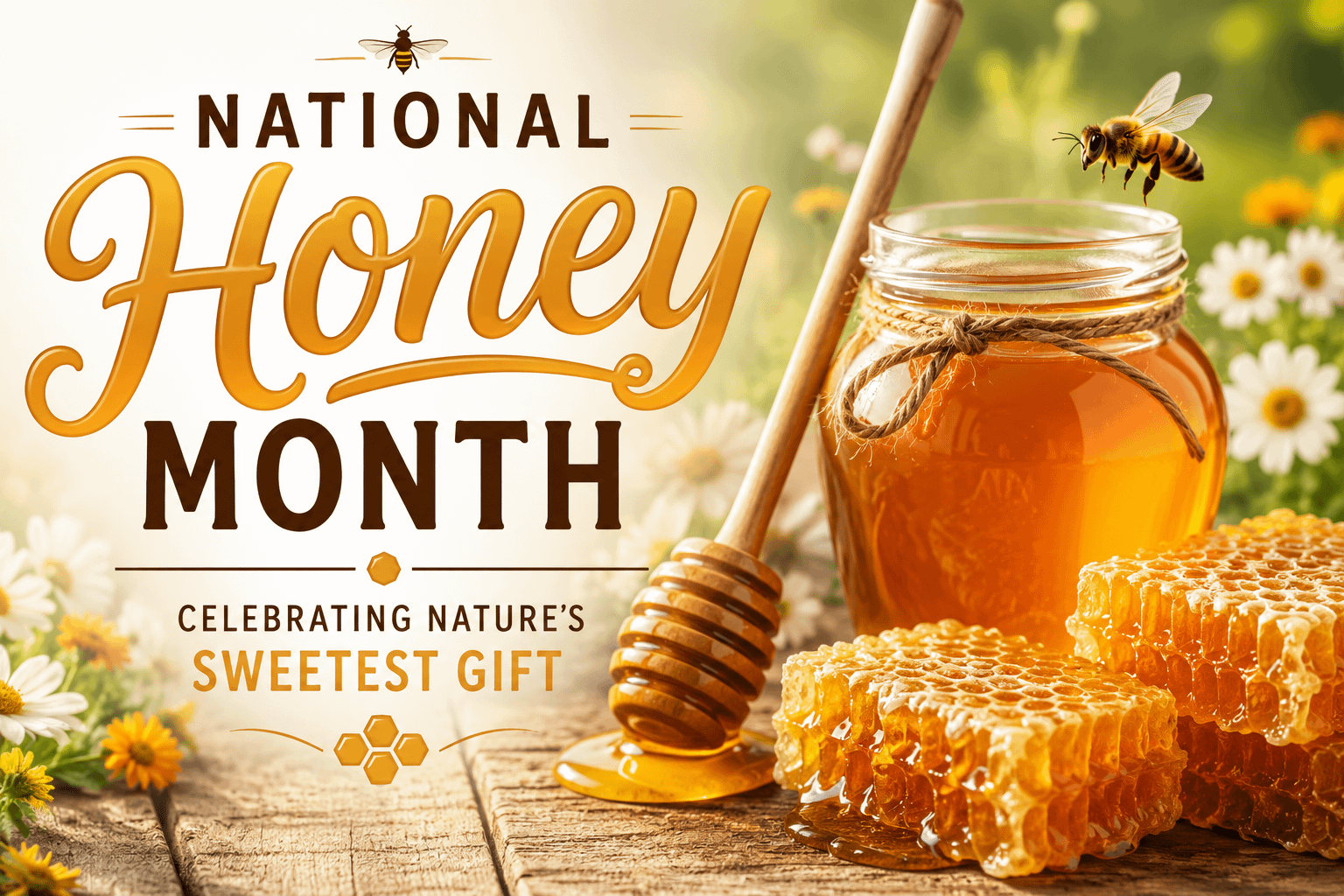
Every September brings a celebration that is naturally sweet: National Honey Month. It’s a time to appreciate one of nature’s most remarkable foods while also recognizing the hardworking honey bees and beekeepers who make it possible.
Honey has been treasured for thousands of years. Long before refined sugar became common, people relied on honey to sweeten foods and drinks. But honey is much more than something to drizzle over biscuits or stir into tea. Its history, variety, culinary versatility, and connection to agriculture make National Honey Month worth celebrating.
Why Is National Honey Month Celebrated in September?
National Honey Month is observed throughout September, a fitting time because it traditionally coincides with the end of the major honey-harvesting season in many parts of the United States.
By late summer and early fall, beekeepers have often completed much of their seasonal honey harvest. September therefore offers an opportunity to celebrate the year’s work while encouraging people to discover the many ways they can enjoy honey.
It is also a chance to recognize the people behind the jars lining grocery store shelves and farmers market tables.
Beekeeping requires patience, knowledge, observation, and an understanding of the natural world. Beekeepers monitor their colonies, protect the health of their bees, manage hives, harvest honey, and help support pollination.
National Honey Month reminds us that every spoonful has a fascinating story behind it.
Honey Is One of Nature’s Most Fascinating Foods
The journey from flower to honey jar begins when worker bees visit flowers and collect nectar.
The nectar is carried back to the hive, where it is transferred among bees and gradually transformed. Bees place it into the honeycomb and reduce its moisture content by circulating air with their wings. Once the honey has reached the proper consistency, the cells can be sealed with beeswax.
The result is the thick, sweet substance people have enjoyed for generations.
What makes the process especially remarkable is the enormous amount of work involved. A colony may visit countless flowers while gathering the nectar necessary to produce its honey supply.
The next time you add a spoonful of honey to breakfast, it is worth remembering just how much activity took place before it reached your table.
Honey Doesn’t All Taste the Same
One of the best parts of National Honey Month is discovering that honey can have dramatically different flavors.
Its taste, aroma, and appearance are influenced largely by the flowers from which bees collect nectar.
Depending on where the bees forage, honey may be light and delicate, rich and bold, fruity, floral, earthy, or slightly spicy.
Some varieties you might encounter include:
- Clover honey — Mild, familiar, and versatile.
- Orange blossom honey — Often light and fragrant with subtle citrus characteristics.
- Wildflower honey — Flavor can vary considerably depending on the flowers available in a particular area.
- Buckwheat honey — Darker and generally stronger in flavor.
- Acacia honey — Typically light, mild, and slow to crystallize.
- Sage honey — Usually mild and pleasantly sweet.
Trying different varieties can be similar to tasting different coffees or chocolates. Once you start paying attention, you may notice flavors you never realized were there.
Honey in the Kitchen
Honey is incredibly versatile.
Of course, it is wonderful drizzled over pancakes, waffles, biscuits, toast, oatmeal, yogurt, or fresh fruit. But its usefulness extends far beyond breakfast.
Honey can be incorporated into marinades, salad dressings, sauces, baked goods, glazes, desserts, beverages, and savory dishes.
Try adding honey to homemade barbecue sauce or brushing a honey glaze over chicken or salmon. Combine it with mustard for an easy honey-mustard sauce. Mix honey with lemon and warm water for a comforting beverage, or use a small amount to sweeten coffee or tea.
It can also complement cheeses, nuts, apples, pears, berries, and other foods beautifully.
September is a perfect month to experiment with honey in recipes you have never tried before.
Honey and the Changing Seasons
National Honey Month arrives at an especially appropriate moment.
September represents the transition from summer into fall. Farmers markets are filled with late-summer produce, mornings begin feeling cooler, and many people start thinking about comforting autumn foods.
Honey fits naturally into both seasons.
You can use it in refreshing lemonade during the final warm days of summer and then stir it into hot tea when the first chilly evenings arrive.
Honey also pairs wonderfully with many fall flavors, including apples, cinnamon, pumpkin, pecans, walnuts, sweet potatoes, and warm spices.
A simple bowl of oatmeal topped with sliced apples, cinnamon, nuts, and a drizzle of honey can make an ordinary autumn morning feel special.
Celebrating the Honey Bee
National Honey Month wouldn’t exist without honey bees.
While honey is the product we’re celebrating, bees themselves deserve recognition for their broader role in agriculture and ecosystems.
Pollinators help many flowering plants reproduce. Bees visit flowers while searching for nectar and pollen, transferring pollen as they move between blossoms.
This process supports the production of many fruits, vegetables, nuts, seeds, and other crops.
That means celebrating honey can also become an opportunity to learn more about pollinators and the environments they need to thrive.
Supporting Local Beekeepers
One meaningful way to celebrate National Honey Month is by purchasing honey from a local beekeeper when possible.
Visit a farmers market, farm stand, local food store, or community event and see whether locally produced honey is available.
You may discover varieties that reflect flowers growing specifically in your region.
Talking with a beekeeper can also be educational. Ask where the hives are located, what plants the bees commonly visit, when the honey was harvested, or how its flavor changes throughout the season.
Buying local honey can turn a simple purchase into a connection with your community and the people working within its agricultural landscape.
Why Does Honey Crystallize?
Have you ever opened your pantry and discovered that your once-liquid honey has become thick or grainy?
Don’t immediately assume something is wrong.
Crystallization is a natural process.
Honey contains natural sugars, particularly glucose and fructose. Over time, glucose can form crystals, causing honey to become thicker or more solid.
Different types of honey crystallize at different speeds.
If you prefer liquid honey, gently warming the container in warm water can often help dissolve the crystals. Avoid excessive heat, particularly if the honey is stored in plastic.
Some people actually prefer crystallized honey because its thicker texture makes it easy to spread on toast, biscuits, and other foods.
Honey Has a Remarkably Long History
Human appreciation for honey goes back thousands of years.
Ancient cultures collected and valued honey for food and other uses. Its sweetness made it particularly prized during eras when modern sweeteners weren’t readily available.
Honey has appeared in foods, drinks, cultural traditions, and historical writings across civilizations.
That long history makes opening a jar of honey surprisingly meaningful. You’re enjoying a food that people have valued across generations and continents.
Technology may have changed dramatically, but our appreciation for sweetness hasn’t disappeared.
Simple Ways to Celebrate National Honey Month
You don’t need an elaborate celebration. September offers plenty of easy opportunities to appreciate honey.
Try a honey variety you’ve never tasted before. Visit a farmers market and purchase a jar from a beekeeper. Make honey-glazed chicken for dinner. Bake honey bread or muffins. Add honey to your morning oatmeal. Create a homemade honey salad dressing. Prepare a cheese board with honey, fruit, and nuts.
You could even organize a small honey tasting.
Purchase several varieties and place a little of each on separate spoons or small dishes. Taste them side by side and compare their color, aroma, texture, and flavor.
You may be surprised by how different they are.
Plant Something for Pollinators
National Honey Month can also inspire us to think beyond the honey jar.
If you have a yard, garden, patio, balcony, or even a few containers, consider growing flowering plants that provide food for pollinators.
The best choices depend on your region and growing conditions, so looking for native flowering plants suited to your area is a great place to start.
Creating a landscape with flowers blooming at different times can provide pollinators with food across a longer portion of the year.
Even a small garden can become part of a much larger network of habitat.
Teach Children Where Honey Comes From
National Honey Month provides a fun educational opportunity for families.
Children may recognize honey from a squeeze bottle without understanding the incredible process behind it.
Teach them about honey bees, flowers, nectar, pollen, honeycomb, queens, workers, drones, and beekeepers. Look for a local educational beekeeping event or visit a farm that offers demonstrations.
Then finish the lesson with something delicious—perhaps honey on toast, yogurt with fruit and honey, or homemade honey muffins.
Connecting food with its origins can help children develop a greater appreciation for agriculture and nature.
Important: Honey should not be given to children younger than 12 months because of the risk of infant botulism.
A Month to Appreciate the Little Things
Perhaps National Honey Month carries a larger lesson.
A jar of honey looks simple.
Yet behind that jar are flowers, sunshine, rainfall, changing seasons, thousands of tiny journeys made by bees, carefully constructed honeycomb, and the work of beekeepers.
Something ordinary becomes extraordinary when we understand how it was created.
That’s part of what makes National Honey Month special.
It encourages us to slow down long enough to appreciate something we might otherwise take for granted.
Celebrate Something Naturally Sweet
Throughout September, give honey a little extra appreciation.
Drizzle it over breakfast. Experiment with it in a new recipe. Compare different varieties. Support a local beekeeper. Learn something new about honey bees. Plant flowers for pollinators.
And when you open that next jar, remember that you’re holding the result of an extraordinary partnership between flowers, bees, nature, and people.
National Honey Month is more than a celebration of sweetness—it’s a celebration of the remarkable natural process that brings that sweetness to our tables.
What’s your favorite way to enjoy honey—drizzled over breakfast, stirred into tea, used in cooking, or straight from the spoon?
Leave a Reply