Thanksgiving turkey is the centerpiece of one of the most anticipated meals of the year. Whether you are preparing your first holiday dinner or have been roasting turkeys for decades, choosing the right oven temperature can make the difference between a beautifully golden, juicy bird and one that turns out dry, unevenly cooked, or disappointing.
One of the most common questions home cooks ask is: What is the best temperature to roast a Thanksgiving turkey?
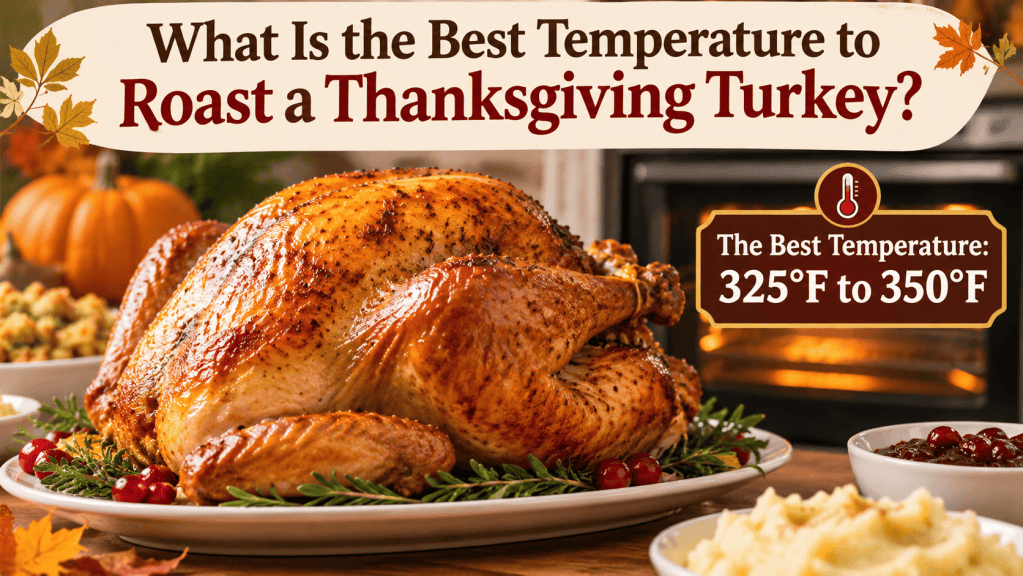
The answer depends on the size of your turkey, whether it is stuffed, and how you prefer the skin and meat to turn out. However, 325°F to 350°F is generally the best temperature range for roasting a whole Thanksgiving turkey.
These temperatures allow the turkey to cook evenly while developing flavorful, golden-brown skin without drying out the breast meat too quickly.
Understanding how oven temperature affects cooking time, moisture, and texture will help you prepare a Thanksgiving turkey that your family and guests will remember.
What Is the Ideal Oven Temperature for Thanksgiving Turkey?
For most Thanksgiving turkeys, roasting at 325°F or 350°F produces excellent results.
Both temperatures offer advantages, depending on your cooking preferences.
Roasting Turkey at 325°F
Roasting at 325°F is a traditional method that works particularly well for larger birds.
The slightly lower temperature allows heat to penetrate the turkey gradually, helping the breast and thigh meat cook more evenly.
Benefits of roasting at 325°F include:
-
Gentle, consistent cooking throughout the bird.
-
Reduced risk of excessive browning before the center is cooked.
-
A reliable temperature for larger Thanksgiving turkeys.
-
More time to monitor internal temperatures.
-
A traditional roasting method suitable for stuffed or unstuffed turkeys.
The primary disadvantage is that roasting at 325°F takes longer than cooking at higher temperatures.
However, the additional cooking time can be worthwhile when preparing a large turkey for a holiday gathering.
Roasting Turkey at 350°F
Roasting at 350°F is another excellent option and is often preferred by cooks who want a balance between cooking speed and browning.
At this temperature, the turkey develops a golden exterior while the meat cooks at a moderate pace.
Advantages of roasting at 350°F include:
-
Faster roasting compared with 325°F.
-
Better opportunities for golden, crispy skin.
-
A good balance between browning and even cooking.
-
Convenient cooking times for medium-sized turkeys.
-
Less time spent occupying the oven.
For many home cooks, 350°F is the best all-around temperature for roasting an unstuffed Thanksgiving turkey.
The important factor is monitoring the internal temperature rather than relying exclusively on cooking time.
Is It Better to Cook a Turkey at 325°F or 350°F?
Both temperatures can produce a delicious Thanksgiving turkey, but the best choice depends on your priorities.
| Cooking factor | 325°F | 350°F |
|---|---|---|
| Cooking speed | Slower | Faster |
| Skin browning | Gradual | More pronounced |
| Large turkeys | Excellent choice | Good choice |
| Smaller turkeys | Good choice | Excellent choice |
| Risk of overbrowning | Lower | Slightly higher |
| Overall results | Even, traditional roast | Balanced cooking and browning |
If you are roasting a turkey weighing 18 to 24 pounds, 325°F is often a practical choice because it provides a gentler cooking process.
For a turkey weighing 10 to 16 pounds, 350°F is an excellent option.
Neither temperature automatically guarantees juicier meat. Proper internal temperature, preparation, and resting time matter more than a 25-degree difference in oven temperature.
How Long Does It Take to Roast a Thanksgiving Turkey?
Cooking time depends on the turkey’s weight, oven temperature, and whether the bird contains stuffing.
The following estimates apply to fully thawed, unstuffed turkeys roasted in a conventional oven.
Thanksgiving Turkey Cooking Time Chart
| Turkey weight | At 325°F | At 350°F |
|---|---|---|
| 8–12 pounds | 2¾–3 hours | 2½–3 hours |
| 12–14 pounds | 3–3¾ hours | 2¾–3½ hours |
| 14–18 pounds | 3¾–4¼ hours | 3½–4 hours |
| 18–20 pounds | 4¼–4½ hours | 4–4¼ hours |
| 20–24 pounds | 4½–5 hours | 4¼–4¾ hours |
These times are approximate planning estimates, not guarantees.
Actual cooking time can vary because of oven accuracy, turkey shape, starting temperature, and roasting equipment.
Always verify doneness with a reliable food thermometer.
For stuffed turkeys, allow additional cooking time and make sure the center of the stuffing reaches 165°F.
What Internal Temperature Should Thanksgiving Turkey Reach?
The most important temperature when roasting turkey is not the oven setting. It is the internal temperature of the meat.
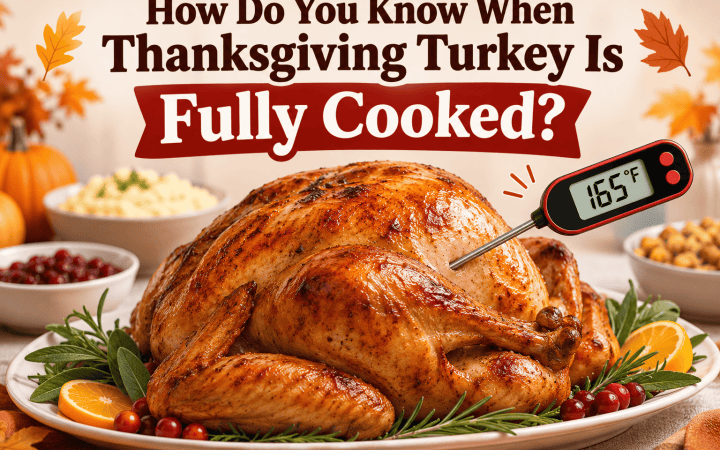
According to USDA food safety guidance, turkey should reach a minimum internal temperature of 165°F.
Check the temperature in three locations:
-
The thickest part of the breast.
-
The innermost part of the thigh.
-
The innermost part of the wing.
Avoid touching bone with the thermometer because this can produce an inaccurate reading.
Every checked location should reach at least 165°F.
Dark meat may become more tender when cooked to a somewhat higher temperature, but 165°F is the minimum safe temperature.
If the turkey contains stuffing, the center of the stuffing must also reach 165°F.
Why Internal Temperature Matters More Than Cooking Time
Two turkeys of identical weight may finish roasting at different times.
Factors that influence cooking include oven calibration, pan material, bird shape, and whether the oven door is opened frequently.
A meat thermometer eliminates much of the guesswork.
Start checking the turkey before the estimated cooking time ends so you can avoid unnecessary overcooking.
Should You Start Thanksgiving Turkey at a Higher Temperature?
Some cooks prefer starting their Thanksgiving turkey at a higher oven temperature before reducing the heat.
For example, they might begin roasting at 425°F for approximately 20 to 30 minutes, then reduce the oven temperature to 325°F or 350°F.
This technique can encourage early browning and help create a more attractive exterior.
However, it is not necessary for producing a delicious Thanksgiving turkey.
Benefits of Starting at a Higher Temperature
Beginning with higher heat may help:
-
Promote early skin browning.
-
Develop a deeper golden exterior.
-
Encourage surface moisture to evaporate.
-
Create a more roasted appearance.
Potential Disadvantages
High-temperature roasting also introduces challenges.
The breast skin may brown too quickly, especially on larger birds.
Butter, herbs, and seasonings can darken or burn if exposed to excessive heat.
Additionally, high-temperature roasting requires closer monitoring.
For beginners, maintaining a consistent temperature of 325°F or 350°F is usually easier and more predictable.
What Temperature Makes Thanksgiving Turkey Skin Crispy?
Crispy turkey skin develops when surface moisture evaporates and the skin browns during roasting.
An oven temperature of 350°F can produce beautifully browned skin, especially when the turkey has been properly dried before cooking.
However, oven temperature is only one factor.
How to Get Crispy Thanksgiving Turkey Skin
1. Dry the turkey thoroughly.
Use paper towels to remove moisture from the turkey’s exterior before seasoning.
Dry skin browns more effectively than wet skin.
2. Refrigerate the turkey uncovered.
For improved skin texture, place the turkey on a rack in the refrigerator, uncovered, for 12 to 24 hours before roasting.
Keep the refrigerator at 40°F or below and prevent the raw turkey from contacting other foods.
3. Apply a light coating of oil or butter.
A thin layer of oil or melted butter encourages browning and adds flavor.
Avoid excessive amounts that collect in the roasting pan.
4. Roast the turkey uncovered when possible.
Leaving the turkey uncovered exposes the skin to the oven’s dry heat.
If certain areas become too dark, loosely cover those sections with aluminum foil.
5. Avoid excessive basting.
Repeatedly pouring liquid over the turkey can soften the skin and slow browning.
Frequent oven-door opening also releases heat and may extend cooking time.
For crispier skin, focus on drying the exterior and maintaining consistent oven heat.
What Is the Best Temperature for a Large Thanksgiving Turkey?
Large Thanksgiving turkeys require special attention because the breast and thigh meat do not always cook at the same rate.
For turkeys weighing 18 pounds or more, roasting at 325°F is a reliable option.
This temperature allows the turkey to cook steadily without exposing the exterior to unnecessarily aggressive heat.
When roasting a large turkey, follow these recommendations:
-
Use a sturdy roasting pan with a rack.
-
Position the turkey breast-side up.
-
Leave space around the turkey for air circulation.
-
Check internal temperatures in multiple locations.
-
Protect the breast with foil if it browns too quickly.
-
Allow sufficient resting time before carving.
For very large turkeys, consider roasting two smaller birds instead of one oversized turkey.
Smaller turkeys are often easier to handle, cook more predictably, and provide additional breast and leg portions for guests.
Should You Roast Thanksgiving Turkey Covered or Uncovered?
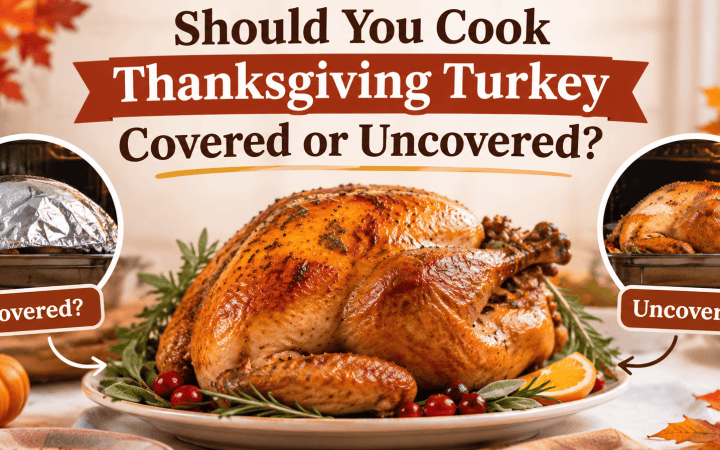
For most of the cooking process, roasting turkey uncovered is the preferred method.
An uncovered turkey develops a more flavorful, golden exterior because the skin is directly exposed to oven heat.
Covering the entire turkey tightly with foil traps moisture around the skin and reduces browning.
However, aluminum foil can still be useful.
If the breast becomes deeply browned before the thighs are fully cooked, loosely place foil over the breast.
This protects the skin from excessive browning while allowing the turkey to continue roasting.
Avoid wrapping the entire turkey tightly in foil unless you are intentionally following a covered-roasting recipe.
For traditional Thanksgiving turkey, uncovered roasting with occasional foil protection offers a good balance.
Does Roasting Temperature Affect How Juicy the Turkey Is?
Yes, roasting temperature can influence moisture retention, but the final internal temperature is more important.
Turkey breast contains relatively little fat, making it vulnerable to drying out when overcooked.
Higher oven temperatures can increase the risk of overcooking the exterior before the center reaches a safe temperature.
However, roasting at a lower temperature does not automatically prevent dry meat.
Even a turkey roasted at 325°F can become dry if it remains in the oven too long.
How to Keep Thanksgiving Turkey Moist
Several preparation techniques can help improve moisture retention.
Brine the turkey before roasting.
A properly prepared wet or dry brine can improve seasoning and help the meat retain moisture during cooking.
If the turkey is already labeled self-basting, enhanced, or pre-brined, check the package before adding more salt.
Avoid overcooking the breast.
Monitor the breast temperature carefully and verify that it reaches 165°F.
Use butter or oil for flavor.
Butter beneath the breast skin can add richness, although it does not replace proper temperature control.
Allow the turkey to rest.
Resting gives the meat time to cool slightly and makes carving easier while reducing immediate juice loss.
Carve carefully.
Use a sharp carving knife and cut across the grain where practical to produce tender slices.
The best combination is moderate roasting heat, careful temperature monitoring, and adequate resting time.
Should You Roast a Stuffed Turkey at a Different Temperature?
Stuffed turkeys require additional cooking time because heat must penetrate the stuffing inside the cavity.
The USDA recommends an oven temperature of at least 325°F for roasting turkey.
A stuffed turkey can be roasted at 325°F, but the center of the stuffing must reach 165°F before serving.
This creates an additional challenge because the turkey breast may become overcooked while the stuffing finishes heating.
For more predictable results, consider cooking the stuffing separately in a casserole dish.
Separately baked stuffing offers several advantages:
-
Easier temperature control.
-
More evenly cooked turkey.
-
Better opportunities for a crispy stuffing surface.
-
Greater flexibility when planning oven space.
-
Less concern about the turkey breast drying out while the stuffing cooks.
If you prefer traditional stuffed turkey, stuff it loosely immediately before roasting and verify the stuffing temperature with a thermometer.
Never rely on the turkey’s appearance alone to determine whether the stuffing is safe.
Should You Use Convection or Conventional Oven Settings?
Both conventional and convection ovens can produce excellent Thanksgiving turkey.
A conventional oven uses radiant heat and natural air circulation.
A convection oven uses a fan to circulate hot air, often improving browning and reducing cooking time.
Conventional Oven
For conventional roasting, 325°F to 350°F is a dependable temperature range.
This is especially useful when following traditional turkey recipes.
Convection Oven
With convection roasting, some recipes recommend reducing the temperature by approximately 25°F compared with conventional roasting.
For example, a recipe calling for 350°F in a conventional oven may use 325°F with convection.
However, the correct setting depends on the appliance and whether it automatically adjusts temperatures.
Consult your oven manual and begin checking the turkey earlier than usual.
Convection cooking can brown the skin more quickly, so watch the breast carefully.
Regardless of oven type, the turkey must reach the proper internal temperature.
How Long Should Thanksgiving Turkey Rest After Roasting?
Resting is an important final step that should be included in your Thanksgiving cooking schedule.
After removing the turkey from the oven, allow it to rest before carving.
For most whole turkeys, approximately 20 to 30 minutes is a practical starting point.
Larger turkeys may benefit from 30 to 45 minutes.
During resting, the juices redistribute and the meat becomes easier to carve neatly.
How to Rest a Thanksgiving Turkey Properly
Transfer the turkey to a clean carving board or serving platter.
Loosely tent it with aluminum foil if necessary.
Avoid sealing the foil tightly because trapped steam can soften the crispy skin.
Use the resting period to finish gravy, warm side dishes, and prepare serving platters.
For food safety, do not leave cooked turkey at room temperature for more than two hours before refrigerating leftovers.
Common Mistakes When Choosing a Turkey Roasting Temperature
Even experienced cooks sometimes make mistakes that affect Thanksgiving turkey.
Understanding these problems can help prevent disappointing results.
1. Roasting at Too High a Temperature
Excessively high heat can brown the outside before the interior is fully cooked.
For most whole turkeys, moderate roasting temperatures are easier to manage.
2. Relying Only on Cooking Time
Cooking charts provide estimates, not exact finishing times.
Always use a thermometer to verify doneness.
3. Opening the Oven Too Frequently
Repeatedly opening the oven door causes heat loss and can increase cooking time.
Check the turkey periodically without unnecessary interruptions.
4. Forgetting to Check the Thighs
The breast may reach the target temperature before other parts of the turkey.
Measure the breast, thigh, and wing to ensure safe cooking.
5. Roasting a Partially Frozen Turkey Without Adjusting the Plan
A turkey that has not fully thawed can take substantially longer to cook.
Plan ahead and thaw the turkey safely in the refrigerator.
Allow approximately 24 hours of refrigerator thawing for every four to five pounds of turkey.
6. Skipping the Resting Period
Carving immediately after roasting can cause more juices to escape.
Allow time for the turkey to rest before serving.
7. Using an Incorrect Oven Setting
Some ovens have separate bake, roast, convection bake, and convection roast settings.
Make sure you understand which setting your recipe requires.
Frequently Asked Questions About Thanksgiving Turkey Roasting Temperature
Is 325°F Too Low to Roast a Turkey?
No. An oven temperature of 325°F is a safe and traditional roasting temperature for a fully thawed turkey.
It works especially well for larger birds that require longer cooking times.
Is 350°F Too High for Thanksgiving Turkey?
No. Roasting at 350°F is an excellent choice for many unstuffed turkeys.
It promotes browning and can shorten cooking time compared with 325°F.
Can You Roast a Turkey at 400°F?
Yes, some recipes use 400°F, particularly for smaller or spatchcocked turkeys.
However, this higher temperature requires closer monitoring because the exterior can brown rapidly.
For a traditional whole Thanksgiving turkey, 325°F to 350°F is generally easier to manage.
What Temperature Should a 20-Pound Turkey Be Cooked At?
A 20-pound turkey can be roasted at 325°F.
Plan for approximately 4½ to 5 hours for a fully thawed, unstuffed bird, while recognizing that actual cooking time may vary.
Use a thermometer to confirm doneness.
Should Turkey Be Roasted Breast-Side Up or Down?
Breast-side up is the traditional and most convenient roasting position.
It encourages browning on the breast and makes monitoring easier.
Some cooks use breast-side-down techniques, but turning a large hot turkey can be difficult and hazardous.
Does Turkey Continue Cooking After You Remove It From the Oven?
Yes. Residual heat can cause the internal temperature to rise during resting, a process called carryover cooking.
The amount varies based on turkey size and roasting conditions.
For straightforward food safety, verify that the turkey reaches 165°F in all required locations rather than depending on an estimated carryover increase.
Can You Change the Oven Temperature While Roasting Turkey?
Yes. You can adjust the temperature if the skin is browning too quickly or if your recipe uses multiple roasting stages.
However, frequent temperature changes can make cooking times less predictable.
A consistent oven setting is usually the simplest approach.
What Is the Minimum Safe Oven Temperature for Roasting Turkey?
The USDA recommends roasting turkey in an oven set to at least 325°F.
Lower-temperature methods are not recommended for traditional whole-turkey roasting because of food safety concerns.
Final Thoughts: What Is the Best Temperature to Roast a Thanksgiving Turkey?
The best temperature to roast a Thanksgiving turkey is generally 325°F to 350°F, depending on the bird’s size and your preferred cooking method.
For larger turkeys, 325°F provides a reliable, steady roasting temperature.
For medium-sized, unstuffed turkeys, 350°F offers an excellent balance of cooking speed, flavorful browning, and manageable roasting time.
Regardless of which temperature you choose, the most important step is ensuring that the turkey reaches an internal temperature of at least 165°F in the thickest part of the breast, innermost thigh, and innermost wing.
Drying the skin, avoiding unnecessary oven-door opening, monitoring temperatures carefully, and allowing the turkey to rest can all contribute to a better holiday meal.
A perfect Thanksgiving turkey does not require complicated cooking techniques or extreme oven temperatures. It requires good preparation, patience, and attention to temperature.
With the right approach, you can serve a Thanksgiving turkey that is golden on the outside, tender on the inside, and ready to become the centerpiece of a memorable holiday dinner.




Leave a Reply